
EnvironmentDecember 1, 2006
Call It Beetle Guard
Bug-based coating could neutralize toxins
Mark Fischetti was a senior editor at Scientific American for nearly 20 years and covered sustainability issues, including climate, environment, energy, and more. He assigned and edited feature articles and news by journalists and scientists and also wrote in those formats. He was founding managing editor of two spin-off magazines: Scientific American Mind and Scientific American Earth 3.0. His 2001 article “Drowning New Orleans” predicted the widespread disaster that a storm like Hurricane Katrina would impose on the city. Fischetti has written as a freelancer for the New York Times, Sports Illustrated, Smithsonian and many other outlets. He co-authored the book Weaving the Web with Tim Berners-Lee, inventor of the World Wide Web, which tells the real story of how the Web was created. He also co-authored The New Killer Diseases with microbiologist Elinor Levy. Fischetti has a physics degree and has twice served as Attaway Fellow in Civic Culture at Centenary College of Louisiana, which awarded him an honorary doctorate. In 2021 he received the American Geophysical Union’s Robert C. Cowen Award for Sustained Achievement in Science Journalism. He has appeared on NBC’s Meet the Press, CNN, the History Channel, NPR News and many radio stations.
Call It Beetle Guard
Bug-based coating could neutralize toxins
A Science of the Web Begins
Gunk-Free Fiber
Brain Atlas Released
Working Knowledge: Image Stabilization—Steady Cam
"Hold still while I take your picture."
Working Knowledge: Tall Task—Water Towers
Working Knowledge: Perpendicular Recording—Going Vertical
Working Knowledge: Vascular Stents—Expanding Use
Working Knowledge: Oil Refineries—Carbon Hooch
Heating oil, gasoline, jet fuel, kerosene and plastics. These products and more are derived from crude oil in one big fuming silo, siphoned off and fine-tuned through a bewildering maze of pipes.
Better Than Individuals
Working Knowledge: Robot Mowers—Cutting Work
Working Knowledge: Jet Engines—Big Squeeze
Working Knowledge—Tiny Motors: Spin and Swing
Facing a Transplant
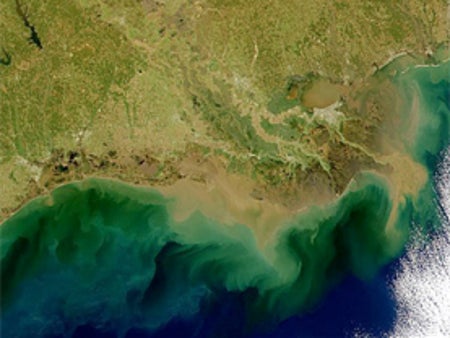
Protecting New Orleans
Hurricanes Katrina and Rita devastated the Gulf Coast. The storm season starts again this June--and every June. Can coastal communities ever be safeguarded?
Levees—Into the Breach
Continuously Variable Transmission—No More Gears
Responding to Katrina Trauma
Better Exposure—Working Knowledge on Digital X-rays
Case Cracked—Working Knowledge on Nuts
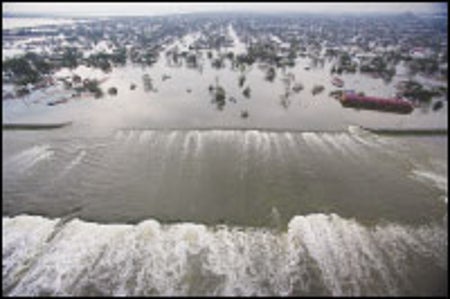
Protecting against the Next Katrina
Wetlands mitigate flooding, but are they too damaged in the gulf?
Paving the Way—Working Knowledge on Roads
Private and Cool—Working Knowledge on Smart Glasses
Ease the Grind—Working Knowledge on Ball Bearings