
This article was published in Scientific American’s former blog network and reflects the views of the author, not necessarily those of Scientific American
In this month’s issue of Scientific American, Stephen S. Hall tells the story of how the revolutionary gene-editing tool known as CRISPR could transform the agricultural industry. Using mushrooms as his primary example, Hall paints a cautiously optimistic picture of how this particular mode of genetic modification could benefit small farmers, as opposed to the multinational corporations typically associated with GMOs. Given the widespread skepticism toward GM products, the challenge will be to dispel public notions of CRISPR as a more advanced, and thus potentially scarier, form of genetic engineering.
Using the principles of genetics to alter crops is not new, of course—in fact, it goes back to Gregor Mendel and his famous crossbred peas. There exists a general understanding that what we now know as GMOs—genetically modified organisms—are different from what Mendel created. But how, exactly, are they different, and why does the distinction matter? Moreover, what sets CRISPR apart from other GM technologies?
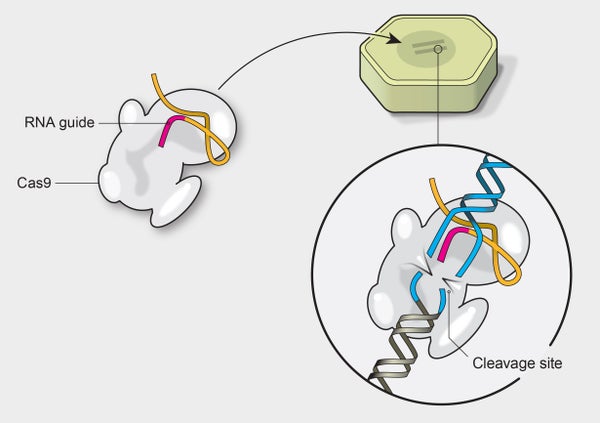
Fortunately, there’s an infographic to answer all of these questions. The graphic below, created by Jen Christiansen as part of the March print feature “Editing the Mushroom,” provides an elegant explanation of three main categories of genetic modification. Using consistent, tangible examples and an accessible visual language, this graphic demystifies GM technology and underscores CRISPR’s potential as a more precise, and in fact less disruptive way to improve crops than science has ever offered before.
On supporting science journalism
If you're enjoying this article, consider supporting our award-winning journalism by subscribing. By purchasing a subscription you are helping to ensure the future of impactful stories about the discoveries and ideas shaping our world today.

Graphic by Jen Christiansen