
Mind & BrainOctober 1, 2008
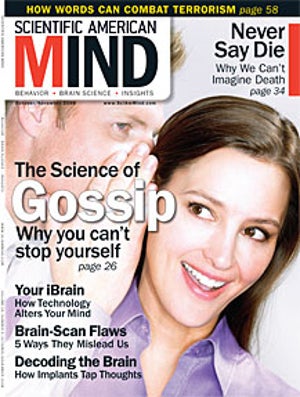
The Science of Gossip: Why We Can't Stop Ourselves
It helped us thrive in ancient times, and in our modern world it makes us feel connected to others—as long as it is done properly
You are currently logged out. Please sign in to download the issue PDF.
The Science of Gossip: Why We Can't Stop Ourselves
It helped us thrive in ancient times, and in our modern world it makes us feel connected to others—as long as it is done properly

Never Say Die: Why We Can't Imagine Death
Why so many of us think our minds continue on after we die

Your iBrain: How Technology Changes the Way We Think
How the technologies that have become part of our daily lives are changing the way we think

Putting Thoughts into Action: Implants Tap the Thinking Brain
Researchers are decoding the brain to give a voice and a hand to the paralyzed—and to learn how it controls our movements

The Psychology of the War on Terror
How we characterize an issue affects how we think about it. Replacing the "war on terror" metaphor with other ways of framing counterterrorism might help us curtail the violence more effectively
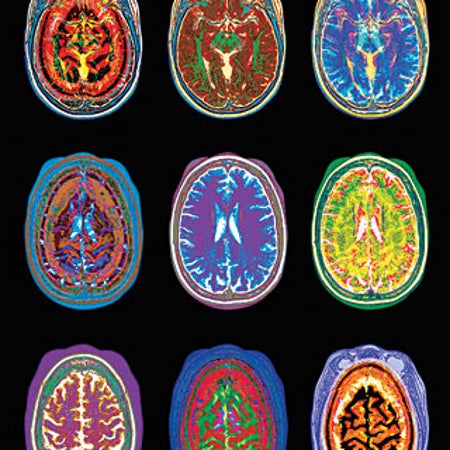
Five Ways Brain Scans Mislead Us
Colorful scans have lulled us into an oversimplified conception of the brain as a modular machine

Tempering Toddler Tantrums Now May Prevent Aggression Later
Emotional outbursts afflict virtually all toddlers. Some children, however, are prone to more violent fits that could—if left unchecked—pave a path toward persistent aggression