LanguageFebruary 21, 2025
Why “Ow!” Needs Absolutely No Translation
The sounds we make during emotional moments or when experiencing pain may not be arbitrary
Why “Ow!” Needs Absolutely No Translation
The sounds we make during emotional moments or when experiencing pain may not be arbitrary

Why the News Feels Overwhelming—And How to Cope
An explanation of the science behind news fatigue, plus expert advice to take control and protect your well-being while staying engaged

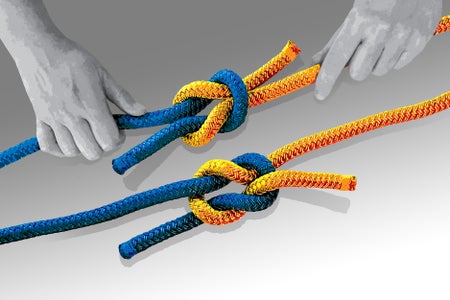
Which Knot Is Stronger? Humans Aren’t Great Judges
People are surprisingly bad at guessing knot strength, a study found

The Brain Science of Elusive ‘Aha! Moments’
What happens in your mind when insight strikes?

New Psychotherapies That Focus on Positive Experiences Could Better Treat Depression and Anxiety
These novel treatments help people with depression and anxiety find joy in life

The Psychology of ‘Shared Silence’ in Couples
The right kind of silence can be golden, revitalizing and strengthening a relationship
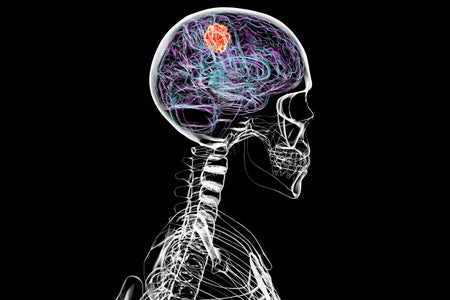
Tumors Hijack the Nervous System to Fuel Their Own Growth
Interrupting signals exchanged between tumors and the nervous system could become a critical pillar of cancer care
The Hidden Costs of Men’s Social Isolation
When men suffer social isolation, women may pay the price, too

Men Actually Crave Romantic Relationships More Than Women Do
A multiple-study analysis looks at why men’s emotional intimacy is much more difficult outside of romantic relationships

Professional Soccer Players May Demonstrate Exceptional Cognitive Control
Top soccer players demonstrate superlative cognitive abilities for strategizing and situational awareness

Bonobos Can Tell When a Human Doesn’t Know Something
An experiment shows that bonobos can understand when a human lacks knowledge and point them in the right direction
Can Hopeful Skepticism Replace Harmful Cynicism?
Giving in to cynicism makes us less trusting, less connected, and even less physically and mentally healthy.