
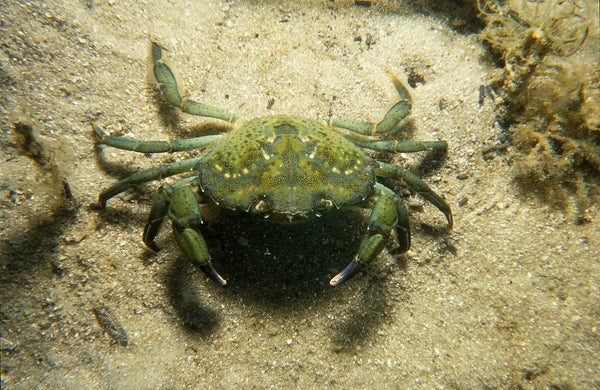

Rats can do it. Mice can do it; honeybees; some people, too. And now add green crabs to the list of creatures that can navigate a maze.
“They’re far more sophisticated animals than we give them credit for.” Ed Pope, a marine biologist at Swansea University in the U.K.
Apart from a couple preliminary papers from the early 1900s, he says—including one by the influential psychologist and primatologist Robert Yerkes—there wasn’t a lot of evidence whether crabs possessed this ability.
On supporting science journalism
If you're enjoying this article, consider supporting our award-winning journalism by subscribing. By purchasing a subscription you are helping to ensure the future of impactful stories about the discoveries and ideas shaping our world today.
So Pope and his colleagues went to the shore and brought back a dozen green crabs. They built mazes in the lab and put a crushed mussel at the end as enticement. Then they set the crabs loose and captured video of their movements. Over the next month, the crabs ran—or maybe skittered—through the maze faster and faster to get to the food.
“But they also started taking fewer and fewer wrong turns. By week three, we had animals that were taking no wrong turns at all. And that gave us quite good evidence they were learning the maze.”
Then the researchers thoroughly scrubbed the tank to get rid of any telltale mussel aromas. After a few weeks, they put the crabs back into the maze. And even with no mussel waiting at the end of the course, experienced crabs still made it to the end more quickly than crabs who’d never walked the maze. That ability suggests that the veterans had indeed remembered the route. The details are in the journal Biology Letters. [Ross Davies et al., Maze learning and memory in a decapod crustacean]
Maze-running crabs are not just a novelty act. The trials demonstrate that wild crabs might be highly competent at returning to a favorite feeding spot or hiding place. And as the world’s oceans become more polluted and acidic, the crab finding gives Pope and other scientists a cognitive skill to test—to see how crabs and other undersea invertebrates might weather a changing tide.
—Christopher Intagliata
[The above text is a transcript of this podcast.]

