
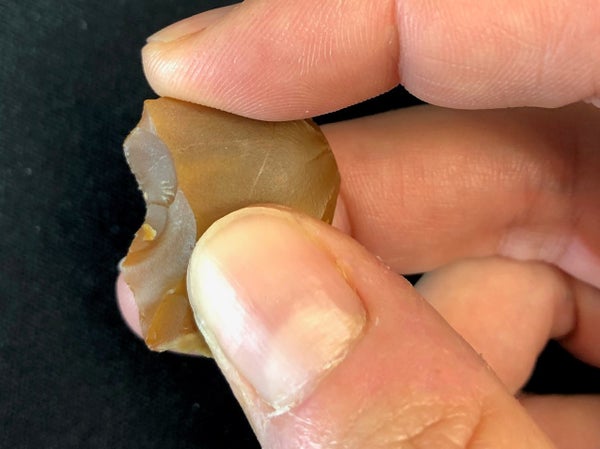

Archaeologists have spent a lot of time analyzing the flashiest objects recovered at ancient sites. But now they’re giving a second look at the waste and finding that it, too, tells tales about a culture. For example, 8,000-year-old poop recently revealed parasitic infections among people who lived in settlements versus their hunter-gatherer counterparts. And now archaeologists have examined another overlooked artifact—small stone flakes, typically thought to be by-products from the production of tools like hand axes and cleavers.
“It was not easy to convince the scientific community that there is value to studying these items, because they were regarded just as waste.”
Ran Barkai, an archaeologist at Tel Aviv University. His team studied 283 stone flakes found in Israel, at a site inhabited by our Homo erectus relatives, half a million years ago.
On supporting science journalism
If you're enjoying this article, consider supporting our award-winning journalism by subscribing. By purchasing a subscription you are helping to ensure the future of impactful stories about the discoveries and ideas shaping our world today.
They found evidence of use—like small fractures—along the edges of the inch-long flakes. But they also discovered bits of bone and flesh still sticking to the tiny blades—flesh that could have come from elephants. The big mammals were much more widespread back then and were a prominent source of protein for early humans in that area.
The team then tested replicas of the flakes to butcher wild boars and deer and sheep. And they concluded that such tools would have been really useful to ancient hunters—for skinning hides, filleting meat and scraping every bit of nutrition out of an animal. Details and photos of the small scalpels are in the journal Scientific Reports. [Flavia Venditti et al., Animal residues found on tiny Lower Paleolithic tools reveal their use in butchery]
Barkai also says the tiny flakes suggest these people were more sophisticated than they get credit for. “Walmarts were nonexistent at the time. So they had to do everything by themselves. And the fact that they survived and thrived for hundreds of thousands of years tells me they were highly capable, highly intelligent. I’m sure they were no less capable than us. And if not for their intelligence, we wouldn’t be here.”
—Christopher Intagliata
[The above text is a transcript of this podcast.]
