

Christopher Intagliata: We humans often navigate using road signs and GPS. Elephants, though?
Connie Allen, a behavioral ecologist at the University of Exeter in the U.K., says they navigate over long distances using their incredible memories. (An elephant never forgets, right?)
Connie Allen: But it’s also been suggested here and there that maybe olfaction and sense of smell is critical to these long-distance movements.
On supporting science journalism
If you're enjoying this article, consider supporting our award-winning journalism by subscribing. By purchasing a subscription you are helping to ensure the future of impactful stories about the discoveries and ideas shaping our world today.
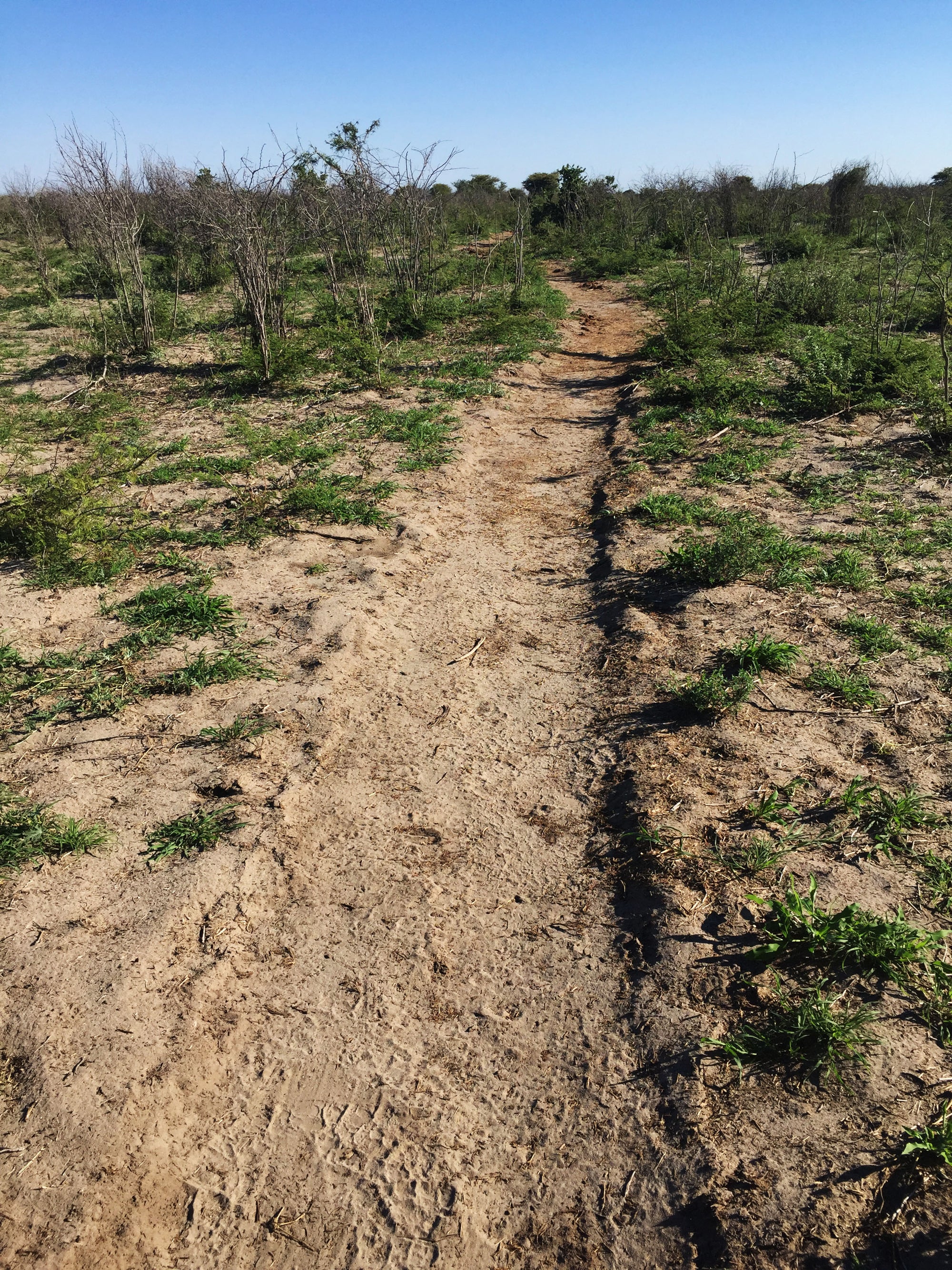
View of a highly trafficked elephant pathway inside the Makgadikgadi Pans National Park in Botswana. The image was taken by a camera trap set to record the movements and behavior of African elephants. Credit: Connie Allen
Intagliata: Allen and her colleagues investigated that idea by testing African elephants’ ability to tune in on a very specific smell: urine. You see, elephants pee a lot—some 12 to 15 gallons a day—and that urine can contain an array of chemical cues.
But first, they needed some pee. So they headed to a spot along Botswana’s Boteti River and waited.
Allen: We’d wait for elephants to urinate and, within 20 minutes, go and collect these fresh urine samples.
Intagliata: Then they set up camera traps on seven elephant trails. After observing the elephants’ natural behavior on the paths, they noticed that a majority investigated scents along the trail—especially elephants traveling alone—an indication, the researchers say, that scents may serve as signposts along the trail.
Next, they placed those urine samples along the trails. And they found that for at least two days, passing elephants trained their trunks on the samples—especially samples from mature adults—another indication that scent might be a potent navigational cue.
Their findings appear in the journal Animal Behaviour. [Connie R. B. Allen et al., Field evidence supporting monitoring of chemical information on pathways by male African elephants]
Based on these results, they hope conservationists might be able to use elephant pee as a decoy.
Allen: If we can trick elephants into thinking the path of other elephants is going this way, maybe we can redirect them away from it at the moment where they are coming into conflict with humans.
Intagliata: They’ll just have to see what happens, once elephants get a whiff of that plan.
[The above text is a transcript of this podcast.]
