
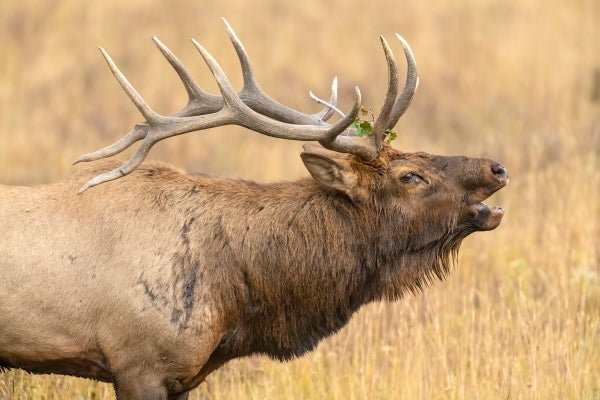

Today, we head to the Rockies during the rut.
In today's episode it's September and we've made our way back to Rocky Mountain National Park in Colorado. The park is mostly known for it's majestic peaks and vistas, but during the fall, there's another attraction. Each year thousands of people crowd the roads to witness giant bull elk work themselves into a frenzy, bugling and fighting for mating rights during the annual elk rut. You and I however, are going experience the rut from a slightly different angle. We're going to spend the morning moving alongside a herd of elk in the backcountry. At dawn and seated at the edge of a meadow, we'll watch over one hundred elk take part in this ancient ritual. Afterwards, we'll track them up into the moutains where they'll spend the day resting and fighting. This is going to be one wild ride. Let's go for a walk.
A quick note before we begin. Elk are wild animals and can be very dangerous, especially during the rut. Make sure to maintain at least 25 yards of distance between you and them at all times.
On supporting science journalism
If you're enjoying this article, consider supporting our award-winning journalism by subscribing. By purchasing a subscription you are helping to ensure the future of impactful stories about the discoveries and ideas shaping our world today.
We got here just in time. Let's settle down into these fallen trees to better camouflage ourselves. I've watched the elk rut from this vantage point so many times. It's a bit of work to get back here so early, but it's worth it.
Each morning at dawn the bull elk look to reassert dominance after the long, dark nights. You get this flurry of activity, which we're watching now, for about an hour before the herd moves off into the cooler air of the mountains to rest, and continue fighting. Near dusk, the herd will again move back down into the meadows to feed and rest during the night. This cycle mostly repeats itself each day.
I fully expect the herd to move from our left to our right as they make their way uphill. We'll have to keep our talking to a minimum and at a whisper so we're not detected. I'll fill you in on any behaviors that stand out, but mostly, just get comfortable and watch this amazing spectacle. Should any elk head our way, just sit tight. We're tucked away in a safe spot outside the meadow.
Huh, don't move.
He ran right in front of us.
I've never heard them quite like this. This is unreal.
Those two bulls are going to fight.
That "mew" sound is from the females.
You can really start to hear how they've moved off to our right into the hills.
Hear that glugging sound? The bulls do that when they're herding up the cows.
This straggler better catch up to the rest of the herd.
Can you believe this?
It's so calm out here now compared to what it was.
Listen to the females calling.
Ok, so we're going to let these last few elk move on and then we'll move on ourselves. Be very quiet when getting up and walking. We don't want to alert them to our presence.
Watch your step, there's a log. You got it?
Hold up. There are two bulls down in the ravine. See them? It looks like they're getting a drink from the creek. Let's sit back down and see what happens.
Hear them drinking?
Here comes the other.
They're wallowing in the mud. I suppose it adds to their allure.
It looks like it was just a quick break. They're moving up the ravine towards the herd. Let's give them some space and then see where they go.
That smaller bull looks like he's going to challenge the bigger one.
Huh, a coyote. I never saw it move in.
Maybe the elk got it worked up too.
Things seem to be calming down a bit. Let's quietly back our way out of here. That was an incredible morning. I'll see you on our next National Park Nature Walk.
