
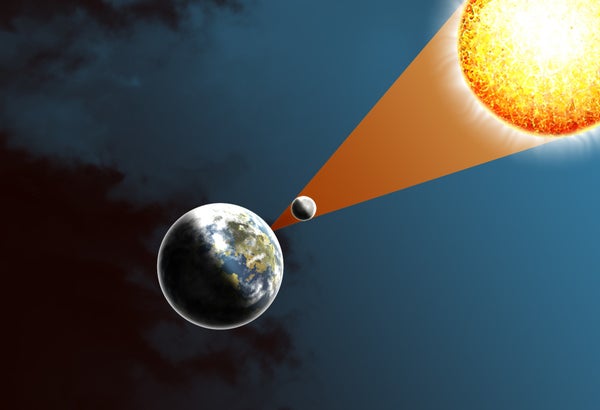

Where were you on August 21, 2017? If you’re like me—and a couple hundred million other Americans—you were watching the total eclipse of the sun. <
It was breathtaking. Mind-blowing. Awesomely spectacular—and potentially educational. Because a new study shows that folks who saw the celestial event sought information on solar eclipses about 16 times both before and after the big day.
In the U.S., some 216 million adults viewed the eclipse. That’s 88 percent of the adult population. This viewership dwarfs that of the Superbowl and ranks among the most watched events in American history. That’s according to the Michigan Scientific Literacy Survey of 2017.
On supporting science journalism
If you're enjoying this article, consider supporting our award-winning journalism by subscribing. By purchasing a subscription you are helping to ensure the future of impactful stories about the discoveries and ideas shaping our world today.
Jon Miller of the University of Michigan conducts a national study of Americans’ scientific know-how twice a year. But last year, he added another survey over the week or two after the eclipse, while the experience was still fresh.
He discovered that in the months prior to the eclipse, there was a flurry of interest in the phenomenon. People searched online for eclipse-related information and talked about it with family and friends.
And the nearly 20 million who traveled to see the eclipse were even more hungry for heavenly knowledge, averaging nearly 25 episodes of eclipse-related information seeking. In comparison, those who for whatever reason missed the event only reported reading or chatting about it six times.
But the interest didn’t end with the sun’s reappearance. After the event, people kept on reporting online-learning and continued conversations. [Jon D. Miller, Americans and the 2017 Eclipse A final report on public viewing of the August total solar eclipse]
Miller’s survey also indicates that by the end of 2017, 70 percent of those questioned were able to explain the meaning of a total solar eclipse. That’s a considerable step up from the 50 percent who understood what an eclipse was at the beginning of the year. Even people who didn’t see the eclipse were more likely to correctly define it by year's end, suggesting that the media coverage and general hubbub rubbed off.
However, the eclipse mania did not appear to boost our overall understanding of the relationship of the Earth and the sun. The percentage of respondents who knew that the Earth circles the sun once each year remained essentially unchanged, at around 64 percent. These findings should give science communicators added incentive to get the word out before the next big North American eclipse: April 8, 2024.
—Karen Hopkin
[The above text is a transcript of this podcast.]

