
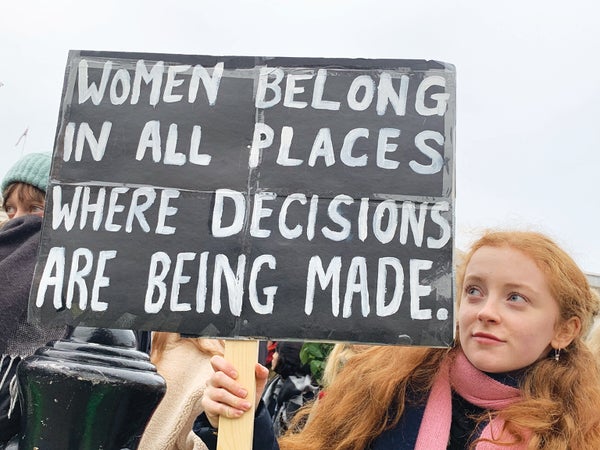
Women have too long been an afterthought: denied equal opportunity at home and in society and ignored by science. Recent decades brought progress toward some measure of parity in the realms of economics, politics, education and health care, but yawning gaps remain, and some are growing, threatening to undermine everyone's well-being. As the World Economic Forum put it in its 2018 report on gender disparities, “More than ever, societies cannot afford to lose out on the skills, ideas and perspectives of half of humanity to realize the promise of a more prosperous and human-centric future that well-governed innovation and technology can bring.”
New research is resolving age-old and often misguided debates about the dissimilarities between the genders. Rather than inherent biological characteristics, environmental factors are coming to be seen as the driving force behind both behavioral and brain differences between men and women, though in some cases amid controversy. Gender variances certainly do impact the health of women: they experience higher risk for depression and Alzheimer's disease and are more susceptible to lesser-known versions of heart disease than men are.
Nowhere are women being more underserved by the biological sciences, perhaps, than in the field of reproductive medicine. Most scientists agree that a dearth of research is harming women's health. After more than 60 years of mass-scale reliance on birth control (which has led to crucial social outcomes for women), investigators are just now considering its physical consequences and asking if better options are possible.
On supporting science journalism
If you're enjoying this article, consider supporting our award-winning journalism by subscribing. By purchasing a subscription you are helping to ensure the future of impactful stories about the discoveries and ideas shaping our world today.
In society and the workplace, women have long suffered the tradition of favoritism toward boys (and violence toward girls) and prejudice against their abilities. Thankfully, many attitudes are evolving, and for the better—overall bias against certain groups has declined in recent years. Adjusting workplace policies can have a drastic effect on retaining and empowering women employees, such as training personnel to change perspectives that prevent the advancement of women and rooting out sexual misconduct. Culture shifts take time, but the payoff is measurable in dollars to the economy and improvements in building the modern world.
The World Economic Forum report made note of a concerning emergence of a gender gap in AI-related skill sets, and surely all sectors of innovation cannot afford to waste the talents of women. Dollars and science aside, there is a more basic reason to care: justice and equality for all.