
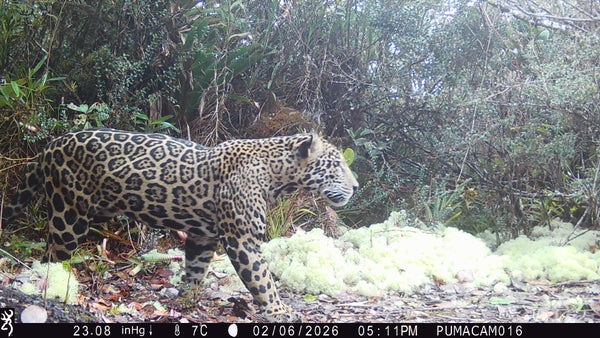
In newly released images, a rare “cloud jaguar” slinks through dense foliage of the jungle-covered Sierra del Merendón mountains in Honduras. The sighting offers a sliver of hope for the imperiled big cat, which is struggling to survive across its range in North and South America, largely because of a combination of habitat loss and poaching.
As farmland, deforestation and human development have fractured its habitat, the jaguar lost as much as an estimated 25 percent of its adult population between 1995 and 2016, according to the International Union for Conservation of Nature and Natural Resources (IUCN), which lists the species as “near threatened.”
Jaguars, whose coats have characteristic spots and rosettes, are the only living members of the genus Panthera that are native to the Americas. (The other members are lions, tigers, leopards and snow leopards.)
On supporting science journalism
If you're enjoying this article, consider supporting our award-winning journalism by subscribing. By purchasing a subscription you are helping to ensure the future of impactful stories about the discoveries and ideas shaping our world today.
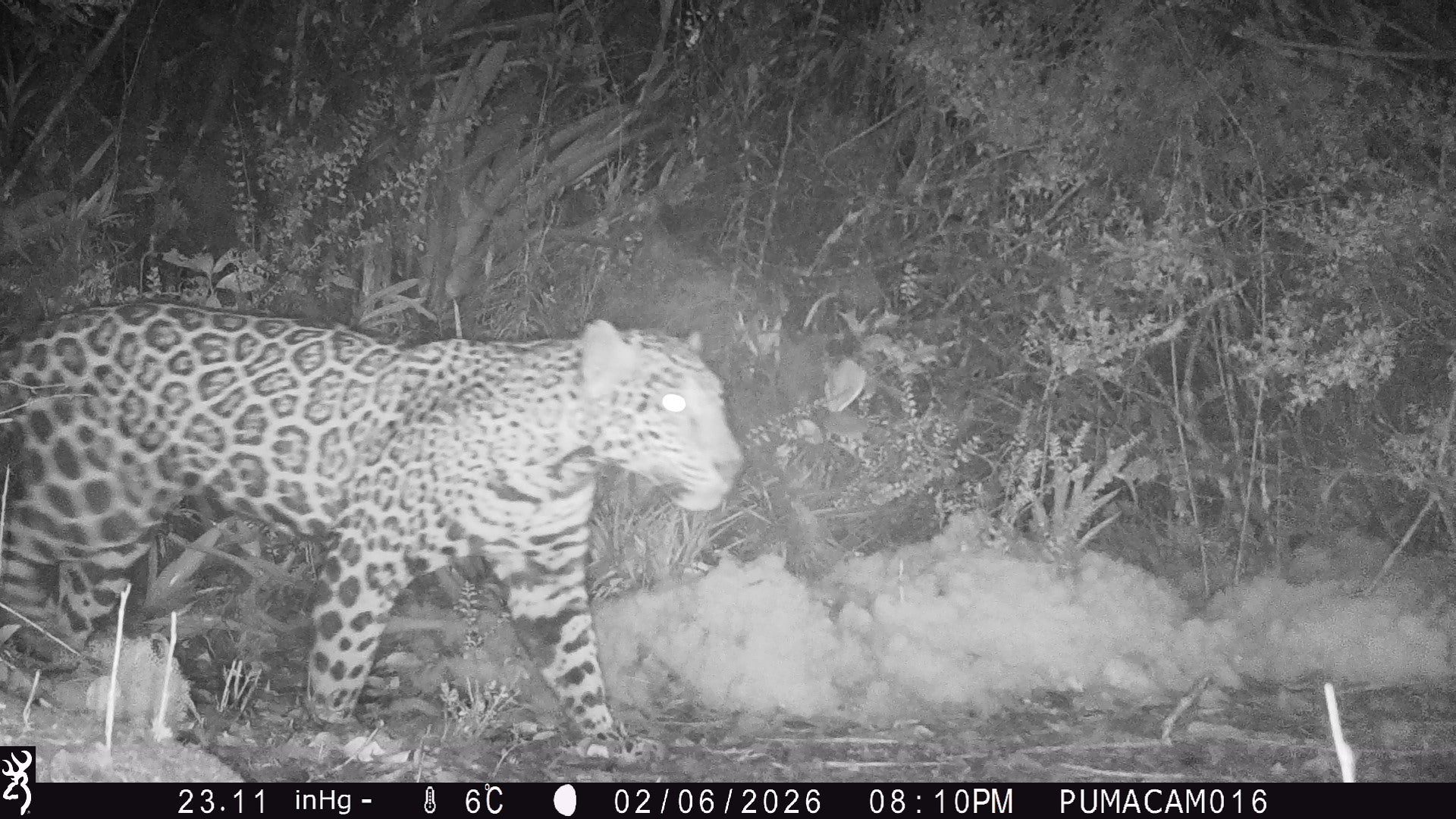
The newly released images, taken in February, show a rare, young male “cloud jaguar”—a jaguar living at high elevations—in the Sierra del Merendón, a key connectivity corridor between jaguar populations in Honduras and Guatemala. It’s the first time scientists say they have documented a jaguar on camera in these mountains in about 10 years.
Panthera-Honduras
“For jaguars, connectivity is paramount,” says Allison Devlin, director of the Jaguar Program at Panthera, an environmental organization that took the images. “The Merendón Range functions as a stepping stone in the Jaguar Corridor stretching from Mexico to Argentina, meaning one thriving individual there signals the corridor’s potential viability.”
The sighting also offers evidence that conservation efforts—such as antipoaching patrols, introducing prey animals, including iguanas and peccaries, and protecting this wildlife corridor—are having “real results,” Devlin says.