
HealthMay 13, 2008
Luring HIV from Hiding
The quest to kill the last traces of the virus secreted away in cells
Gary Stix, formerly senior editor of mind and brain topics at Scientific American, edited and reported on emerging advances that have propelled brain science to the forefront of the biological sciences. Stix has edited or written cover stories, feature articles and news on diverse topics, ranging from what happens in the brain when a person is immersed in thought to the impact of brain implant technology that alleviates mood disorders such as depression. Before taking over the neuroscience beat, Stix, as Scientific American's special projects editor, was responsible for the magazine's annual single-topic special issues, conceiving of and producing issues on Albert Einstein, Charles Darwin, climate change and nanotechnology. One special issue he oversaw on the topic of time in all of its manifestations won a National Magazine Award. With his wife Miriam Lacob, Stix is co-author of a technology primer called Who Gives a Gigabyte? A Survival Guide for the Technologically Perplexed.
Luring HIV from Hiding
The quest to kill the last traces of the virus secreted away in cells
Volatility Kills
Recent economic growth in sub-Saharan Africa may not be sustainable
How Do Tumors Spread? Scientists and Engineers Team Up to Solve Mystery
A $100-million-plus M.I.T. research center will put geneticists, cell biologists, nanotechnologists and biomedical engineers under the same roof to search for new ways to fight the disease
How to Trade for President
The Iowa Electronic Markets allow anyone with an Internet connection and $5, even a trader in Dhaka or Novosibirsk, to buy and sell securities in elections. The example here depicts, in simplified form, how a market run during the 2004 presidential election operated.
Markets Predict Outcome Better Than Polls
Internet-based financial markets appear to forecast elections better than polls do. They also probe how well the next George Clooney drama will do at the box office and how bad the next flu season will be.
Ben Stein Wins Intelligent Design Money
Neurological Insights
Biologists devise a memory on a chip and new ways to tackle Alzheimer's
Progress against Prions
Ideas for treating the human form of mad cow disease begin to emerge
A Simple Mimic
Water droplets encased in fat simulate cell membranes
James Watson and eugenics
Rules of beeping
A Question of Sustenance
Globalization ushered in a world in which more than a billion are overfed. Yet hundreds of millions still suffer from hunger's persistent scourge
Race medicine article: A magnet for controversy
A Malignant Flame
Understanding chronic inflammation, which contributes to heart disease, Alzheimer's and a variety of other ailments, may be a key to unlocking the mysteries of cancer
Selfless Giving
Mom's brain chemical affects embryonic development
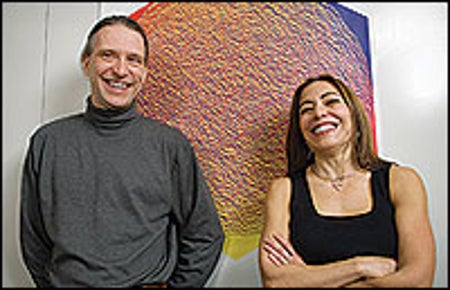
Graph Theory and Teatime
Deep in the heart of Microsoft, Jennifer Chayes and Christian Borgs lead a who's who of mathematics and computer science. The goal? To explore anything they please
The High-Performance Pioneer
Jim Gray, the missing Microsoft computer scientist, helped craft technologies that make the building of gargantuan databases practical
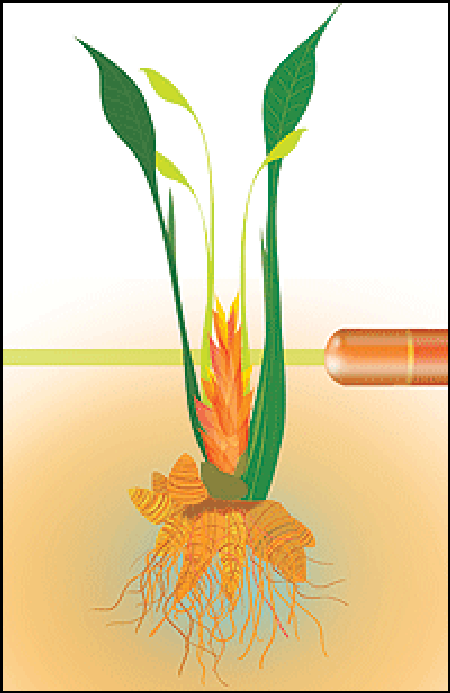
Spice Healer
An ingredient in curry shows promise for treating Alzheimer's, cancer and other diseases
Better Ways to Target Pain
Improved understanding of the chemical pathway on which aspirin and Vioxx act may lead to analgesics with fewer side effects
The Promise of the Mother Cell
Stem cell biology continues to hint at medical benefits to come
Send in the Terminator
A Microsoft tool looks for programs that freeze up
Al Gore
U.S. Vice President The former presidential candidate is the preeminent spokesperson on climate change
Growing Replacement Parts
Bioengineers can now cultivate blood vessels and other tissues from scratch
Have Some Sugar with Your Protein
A tiny company engineers yeast to make better human therapeutics, a technique that could transform biotech manufacturing