
The push for innovation can bring together people from different countries and diverse scientific backgrounds, but with a collective will to help shape the future. This global reach has been made clear through the Arab Innovation Academy (AIA), a groundbreaking showcase of the extent of pan-Arab tech-innovation talent.
Organized by the Qatar Science & Technology Park (QSTP) — part of Qatar Foundation Research, Development and Innovation — in collaboration with the European Innovation Academy (EIA), AIA is the largest entrepreneurship boot-camp of its kind in the region. With its third occurrence now on the horizon for January 2020, the program has so far challenged more than 300 aspiring tech entrepreneurs from universities across the Arab world not just to turn their idea into a viable startup, but to do it in just 10 days, and in teams whose members had never worked together before.
Using a unique, accelerated mode of experiential learning that provides authentic insight into what it takes to launch a new tech venture, the program places teams into a high-octane innovation environment: a real marketplace, with genuine customer feedback and the challenges that innovators around the world face every day. It shows that, when it comes to innovation, there are no boundaries, in both the creative and geographical sense.
“The first two versions of the Arab Innovation Academy have proved to be outstanding successes, as demonstrated by the high level of participation from 30 countries from across the region,” says Yosouf Abdulrahman Saleh, Executive Director, QSTP. “The upcoming round of the program will provide a new batch of budding entrepreneurs with the opportunity to gain invaluable insights and guidance from leading Silicon Valley mentors and experts from the world’s top corporations, who will help the aspiring participants launch their startups and market their tech products in Qatar and beyond.”
The first and second rounds of the two-week startup boot-camp featured 127 and 196 entrepreneurs, respectively, from Qatar and abroad, across a total of 34 teams. And one of the trends that emerged in the 2019 edition was greater participation in the program from young Arab women.
Meanwhile, the program has also broadened its reach beyond the Middle East and North Africa (MENA) region. In 2019, the future ‘techpreneurs’ who took part included innovators from Russia and India, with whom Qatar has shared its two most recent Years of Culture. In 2020, this approach — blending the exchange of tech ideas with the exchange of cultural stories and experiences — will continue, as AIA welcomes participants from France.
Several participants have gone on to launch successful startups after completing the program, which aims to equip participants with the necessary skills and knowledge to pursue technology development and make a positive impact in the world through innovation.
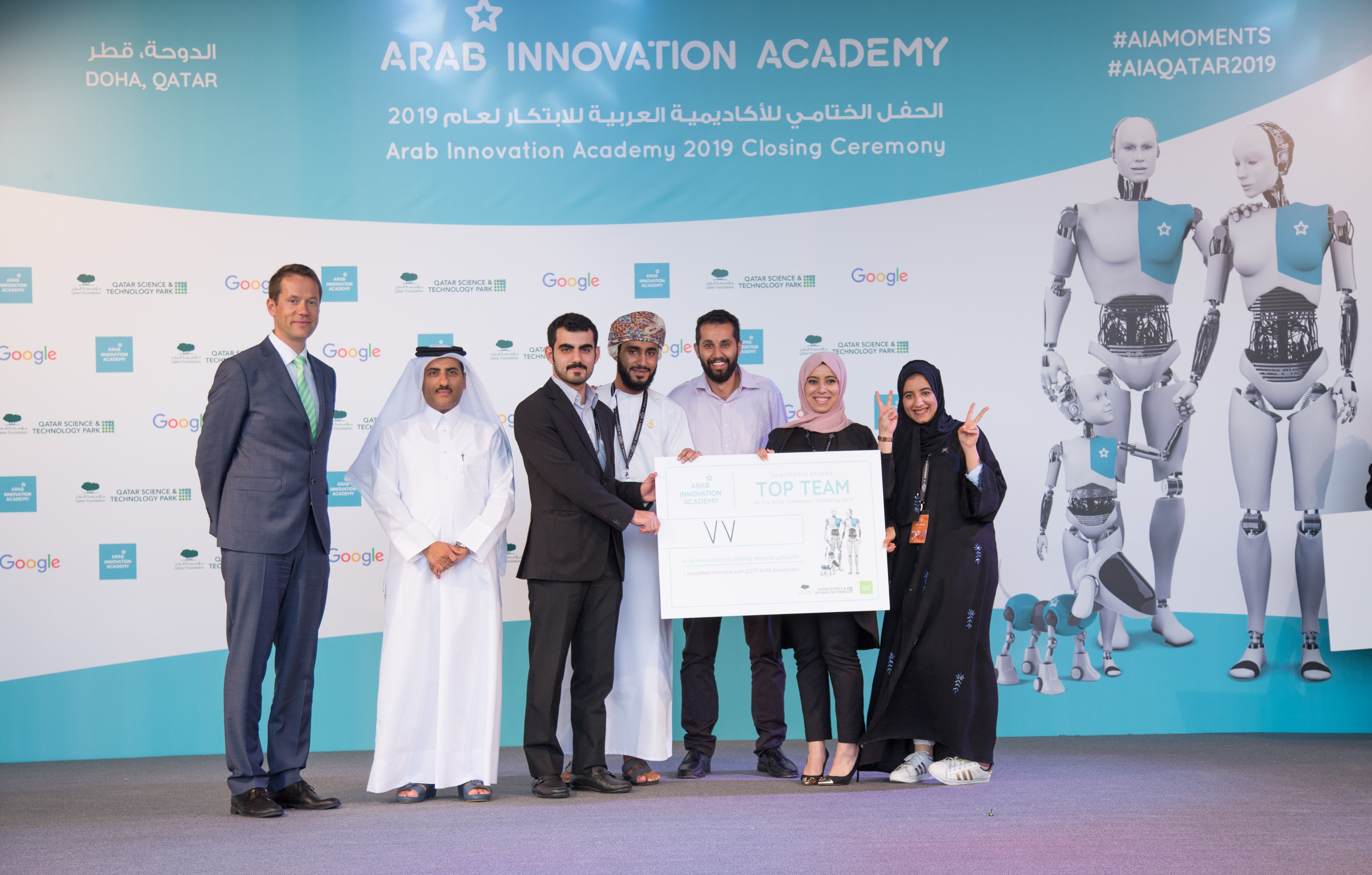
The AIA’s greatest impact is the different outlook its participants have taken away, a mindset of creative collaboration, built on diversity and the opportunity to speak freely about issues. “Before the AIA, I had many ideas that needed support and guidance, but they had not found the light of the day,” says Dina Al Hajjar, a student from Lebanon, and an alumna of AIA 2018. “And when I arrived at Qatar Foundation to take part in the program, I felt like I was in the right place — a place where innovation is born and where supporting talented young people is a priority.”
AIA has demystified the aura around innovation, allowing participants to realize that there is no secret to the success of companies like Google or Uber. There are simply processes that, if followed in the right way, mean that these innovators can succeed as well.
“The key is to embrace the notion that knowledge is organic and innate to us all,” says Shaikha AlSubaey, who participated in the 2019 edition of AIA, and was named joint third-place winner.
On the final day of the AIA, a Grand Pitching Session sees participants pitch the startup ideas they had developed from scratch over the previous two weeks to an international audience of investors and experts.
As the organization behind the world’s largest “extreme entrepreneurship” programs — organized every summer in France, Italy and Portugal — the EIA, a non-profit educational institution, allows aspiring tech entrepreneurs from around the world to access the support and mentorship necessary to launch a new startup in rapid time.
“Innovation distinguishes between leaders and followers,” says Alar Kolk, president of EIA. “If you want to succeed, you should follow new paths. Innovation is not achieved by imitating the success of others; it’s achieved by those who choose to risk failure in order to create something completely new.
“With the most innovative technology, including artificial intelligence and robotics, we are teaching entrepreneurship to students and young professionals as we truly believe that a new star will rise from Arab countries to disrupt economies and businesses in the future. We are providing the tools and cultivating a mindset of innovation among young people to challenge the world’s biggest problems — problems that affect one billion lives every day.”
Looking ahead to the third AIA, Saleh says, “At QSTP, the initiatives we have taken and the projects we are engaged in revolve around our commitment to the process of research, development and innovation. With leading programs like AIA, we encourage our talented youth to take the next step and propel their ideas to the stage of practical implementation.
“We aim to develop an innovative mindset, and to nurture an unprecedented and competitive environment in the MENA region. More importantly, we believe that investment in our region’s talent pool is the key to achieving long-term economic sustainability and prosperity.”
The AIA is just one of the pathways of support that QSTP offers to tech entrepreneurs, both established and aspiring, across the MENA region and beyond. Its Innovation Mindset program, which targets university students, teaches them new skills and expertise in the field of innovation, entrepreneurship and product development. It also features Student Innovation Trips, where participants visit Silicon Valley and can enroll in the European Innovation Academy Summer Program. Meanwhile, its Summer Internship Program allows students to learn about how to develop a tech product.
In terms of accelerating innovation, QSTP’s XLR8 program works with people who have a tech-based service or product idea, and are looking for mentorship, training and coaching, with the MENA Dojo — run in partnership with 500 startups — is open to tech startups that have previously raised funding from other investors, and are now preparing to scale up.
Once a startup has been established, the Research to Startup program at QSTP supports its entrance to the market through enterprise creation. These promising tech startups have the choice of becoming part of QSTP’s Incubation Center, an incubation program that helps nascent tech ventures to grow by offering the facilities and support needed by budding entrepreneurs, as well as access to a network of mentors, funding programs, training and prototyping facilities.
As capital is critical for startups and small to medium enterprises, QSTP offers two funding streams. Through the Product Development Fund, selected companies have access to funding of up to QAR 1.2 million; while the Tech Venture Fund allows tech founders and entrepreneurs to source seed-stage capital when they embark on their entrepreneurial journey.
To learn more about the new science and technology emerging from Qatar, visit the collection.