
Entrepreneurship does not happen spontaneously. It needs to be taught and nurtured and grown. Compared to start-up bastions like Silicon Valley, Qatar is new to entrepreneurship but is developing quickly.
One force driving this change is the Qatar Science & Technology Park (QSTP), which provides support to local tech startups, whether through facilities, connection to international innovation ecosystems, funding or the availability of seasoned experts who can help keep an idea on the road to reality. The QSTP brings together applied research, technology innovation and incubation and entrepreneurship, and already it can claim a few notable successes.
Taking command of education
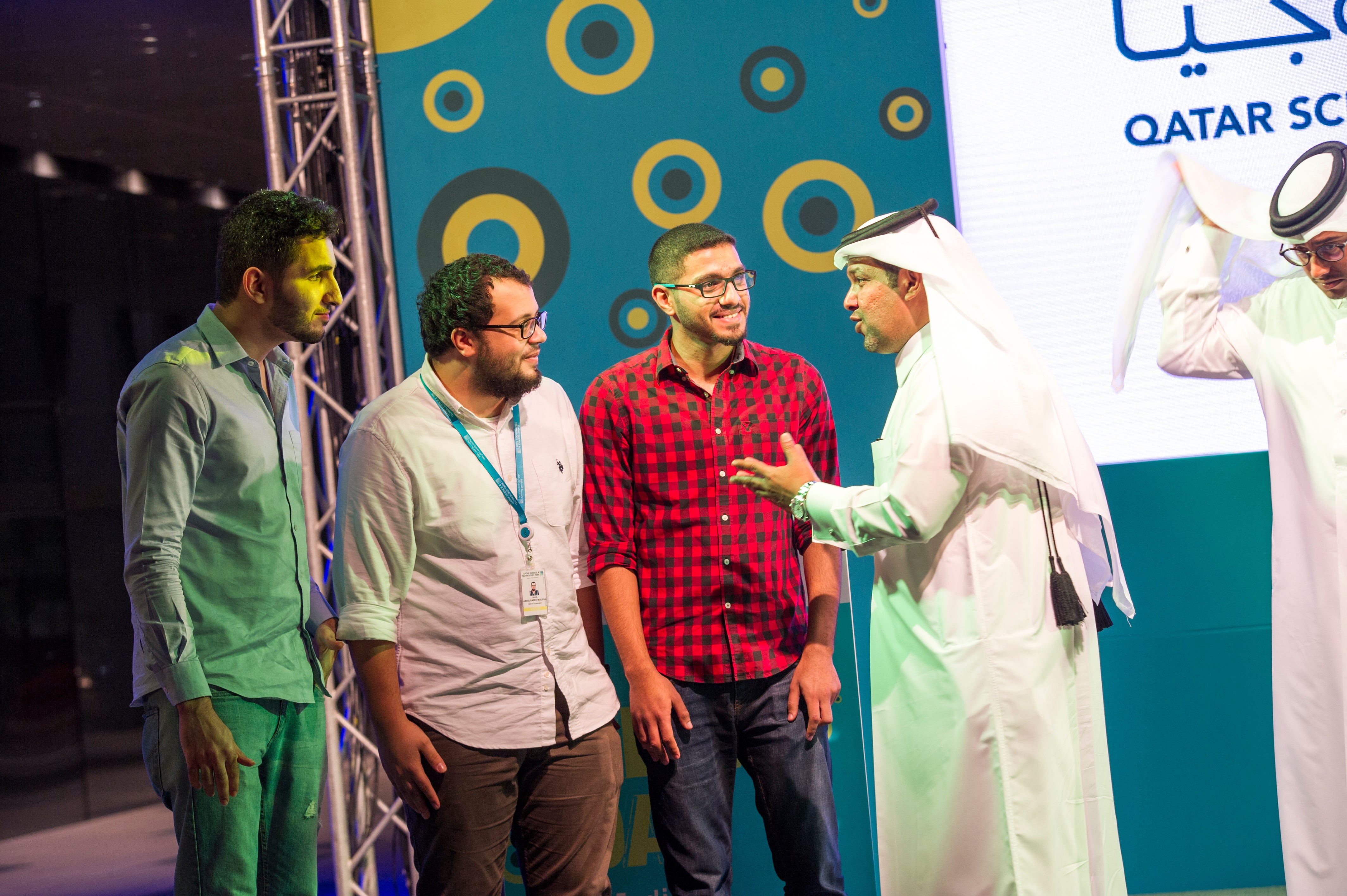
During a course at at Carnegie Mellon University in Qatar (CMU-Q) — one of the branch campuses at Qatar Foundation, where QSTP is also housed —three students realized they might benefit from a one-stop shop for academic planning, data analytics and career navigation. They thought other students might too. The idea became Stellic, an integrated portal that is now being used in 15 universities across Qatar, Mexico and the United States.
The company was incubated at QSTP, where it also received financial support and mentorship. Without QSTP and Qatar Foundation,” says Stellic founder and CEO, Sabih Bin Wasi, “there’s a strong possibility Stellic would not exist today.”
Improving health and wellbeing
QSTP has helped a few different digital health and wellbeing start ups take flight. Take for example, Meddy. Qatar has a wealth of medical practitioners, but it was once difficult for patients to find the right one. So, a team of four CMU-Q graduates saw an opportunity to develop an online platform to help people make informed decisions about where to seek healthcare, based on knowledge and user reviews rather than guesswork. Meddy currently provides information on more than 2,000 doctors from 250 private clinics, including opening hours, medical credentials, languages spoken and insurance guidance. It’s made people’s lives easier.
Bonocle is improving lives in a different way. The digital age has introduced further obstacles for millions of visually-impaired people, and increased the risk of them feeling isolated in education, at work, and during social activities. A team of Qatar-based innovators wanted to change this, and created a pocket-sized gadget that enables the visually impaired to read their emails, texts and social media feeds on phones and tablets. The size of a computer mouse, Bonocle works by transmitting digital content, via Bluetooth, to a receiver, which then converts it into braille.
Devised by three engineers and incubated at QSTP, the device also store books in a braille library, meaning they can be called up and read at leisure. As Ramy Abdulzaher, one of the team behind the device, explains: “Bonocle is much more portable and follows a design concept that integrates the visually-impaired community into society, rather than segregating them into an outlier group.”
Introducing new safeguards
Gas leaks are a grave safety risk and one QSTP company is working to prevent them with new technology. Subol, a Qatari technology startup, has created the Samam LP gas detector for homes and commercial properties, having conducted research that suggested that around 35% of homes in Qatar have suffered from gas-leakage incidents caused by human error.
A smart sensor, Samam is designed to detect leaks and, via Bluetooth, enable the user to close the regulator valve with an app on their phone. “Because it falls under the Internet of Things, it means users can control their gas system from outside their homes, giving them prompt notification of any problems through a secure, reliable network,” says Saleh Safran, Subol’s CEO. “It also has benefits for campers who are using gas, as some of its functions can be used without WiFi connectivity.”
To learn more about the new science and technology emerging from Qatar, visit the collection.