A straightforward method for obtaining snapshots of the 3D frozen structures of biomolecules in action promises to reveal a wealth of new information that is currently hidden in images generated by averaging many individual measurements.
Within weeks of the World Health Organization declaring COVID-19 an international public health emergency, scientists had calculated the molecular structure of the virus’ spike protein — the key it uses to gain access to a host’s cells. The tool that enabled them to do this was cryo-electron microscopy (cryo-EM) — the only technique currently able to visualize molecular structures down to a sub-nanometer level in 3D.
The development and ongoing refinement of this technique is causing an explosion in our knowledge of the molecular structures of key biological compounds such as proteins, which are a key component of viruses. Such progress is vital for understanding how pathogens interact with cells, and therefore introducing new drugs and therapies.
One particularly powerful variation of this technique is cryogenic electron tomography, which generates high-resolution 3D images of flash-frozen biomolecules — essentially the electron microscopy equivalent of computed tomography (CT) scans obtained using X-rays.
However, biological samples are delicate and are damaged by the electron beams used to generate images, so researchers have to take lots of quick, low-quality images of biosamples and then average them.
The downside of this technique is that it’s impossible to obtain snapshots of biomolecules in action; rather scientists have to make do with their average structures. In fact, the atoms constituting a molecule often deviate from their average positions when interacting with other molecules, making it difficult to compute the sequence of their interactions knowing only atomic average positions.
“A major limitation of present cryo-EM is that it cannot image just one biomolecule at high resolution in 3D,” explains Andrea Fera, who was at Geri Anderson and Associates Inc. in Fulton, Maryland, USA, at the time of the study. “Because of this problem, all high-resolution published cryo-EM structures are calculated averaging many, sometimes thousands, samples.”
Recently, Fera has shown how it’s possible to obtain high-quality, atomic-resolution images of one bioprotein using electron microscopy tomography without averaging many experiments.
Flash-frozen biological samples are maintained at liquid-nitrogen temperatures (about –180 degrees Celsius) before and during electron microscopy imaging. Fera’s newly developed workflow involves carefully warming flash-frozen samples until just below –90 degrees Celsius and maintaining this temperature for 1–2 hours before irradiating samples with an accelerated electron beam. This workflow is effective with and without pre-staining the samples.
Since ice directly becomes vapor under such conditions (sublimation), Fera thinks that removing unbound water molecules from cryo-samples in the electron microscope chamber drastically reduces the energy that electron beam can transfer to frozen solid biological molecules. “When you eliminate free water molecules around frozen solid molecules, the remaining chemical species don’t absorb accelerated electrons nor the other frequencies of the radiation generated by electrons while traversing the samples,” Fera says. “Under such conditions, electrons effectively bounce off samples without appreciable energy transfer.”
With little or no energy transfer, structures can withstand much higher radiation doses. “I routinely performed experiments on frozen biomolecules with more than two hours continuous irradiation in an electron microscope,” says Fera.
Fera demonstrated this method on very soft biological samples: the influenza virus, components of the HIV virus, and tubulin microtubules—the protein that makes up the internal scaffolding in human cells. These 3D snapshots revealed details obscured in averaged images and that may suggest important clues about proteins’ functions.
Now at the biotechnology company Cytek Biosciences Inc., Fera is excited about the potential of this technique and has founded another company to promote it.
References:
1. Fera, A. A way to obtain Ångström-level three-dimensional images of flash-frozen proteins in one experiment (no averaging) by electron microscopy tomography. Journal of Biomolecular Research & Therapeutics 11, 1000226 (2022). doi: 10.35248/2167-7956.22.11.226
2. Fera, A. High-resolution electron microscopy tomography of interacting flash-frozen proteins. Systematic Reviews in Pharmacy 13, 48–51 (2022). doi: 10.31858/0975-8453.13.1.48-51
For additional background, see also:
3. Fera, A. & Dye, L. Cryo-fixed stained microtubules can be imaged with high electron doses for accessing the full resolving power of an electron microscope. Microscopy and Microanalysis 23, 1114–1115 (2017). doi: 10.1017/S1431927617006237
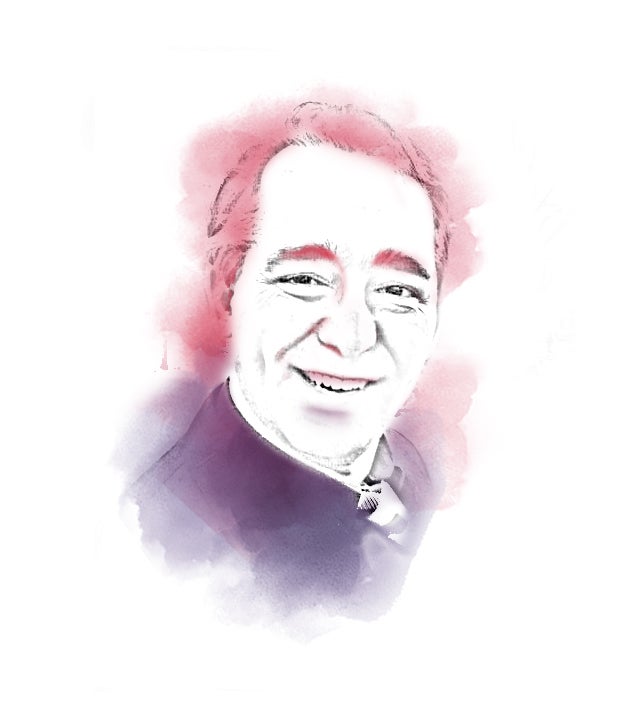 Andrea Fera obtained a Master’s degree in experimental chemistry, before switching to X-ray physics for his PhD at AMOLF in the Netherlands. His first postdoc was in biophysics at the Marie-Curie Institute in Paris. He later joined the National Institutes of Health (NIH) in Bethesda, Maryland, USA, where he used electron microscopy tomography to image individual spike proteins in 3D on the surface of an influenza virus, and he applied this technique to image individual proteins in neurons, without freeze-fixing samples. Later, at NIH, he refined the preparation of cryo-microscopy samples to image flash-frozen individual microtubules at high resolution in 3D. Fera then joined Geri Anderson and Associates Inc. in Fulton, Maryland, USA, where he specialized in deep-learning algorithms for image recognition using satellite imaging. As a side project, Fera conducted experiments of cryo-electron microscopy. Fera now works at Cytek Biosciences in Seattle, where he improves deep-learning algorithms for recognizing cell phenotypes. He also helped to establish Advanced Molecular Imaging, a non-profit organization in Washington DC that could continue this promising research direction.