Researchers stand to gain a more comprehensive understanding of ailments such as cancer and Alzheimer’s disease thanks to a new method that identifies both protein scaffolds and the pivotal disease-associated proteins they interact with. And it could lead to treatments that target entire protein networks, overcoming the limitations of conventional drugs that generally target single proteins.
Biological processes involve fiendishly complex webs of interactions between thousands of different proteins, which act as the workhorses of cells. Like people, cells employ short-term coping strategies to help them through stressful situations. These strategies usually involve tweaking the interactions between their proteins, but this can set cells on the path toward disease, especially if the stress is prolonged.
In stark contrast to this complexity, most drugs for treating diseases interact with only a single protein or an interaction between a pair of proteins. This can explain why they often give mixed results, helping some patients but not others.
There is a desperate need for a method that can enable researchers to map the messy mesh of interactions between proteins in diseased cells. “There are no methods that can reveal how thousands of proteins are organized in a specific context or how such specific protein organization gives rise to the observed disease phenotype,” says Gabriela Chiosis of the Memorial Sloan Kettering Cancer Center in New York, USA.
Now, Chiosis and her co-workers have developed and demonstrated a powerful method for doing just that. Unlike other analysis methods, it doesn’t involve modifying proteins in any way and it can measure them in cells.
Their technique uses molecular probes to identify epichaperomes — scaffolds that reorganize how proteins interact in disease. Epichaperomes are an example of the coping strategies that cells employ when under stress, and they play a role in reorganizing the interactions of proteins in disease.
“We first discovered epichaperomes in the context of cancer,” says Chiosis. “And we later showed that they are also prevalent in neurodegenerative disorders like Alzheimer’s and Parkinson’s disease.”
To demonstrate the method, which is called epichaperomics, Chiosis and her team used it to map the changes in interactions between thousands of proteins involved in cancer-related processes. “We used epichaperomics to shed light on a mechanism in cancer cells that enhances the activity of proteins involved in cell division,” she says. “This offers potential targets for treating cancer.”
As well as being valuable for researching and diagnosing conditions, their method could inform novel treatments that would push protein–protein interactions back toward a healthy state. Rather than targeting a single protein, such treatments would address the intricate web of protein–protein interactions.
“If we could disassemble epichaperomes, we may be able to revert cells to their normal state,” says Chiosis. “We’re now collaborating with various partners to try to show this for different diseases.”
Chiosis is excited about the method’s potential. “Our approach will empower scientists to decipher the secrets of diseases and make significant strides toward improving human health,” says Chiosis. “In particular, epichaperomics will allow them to develop targeted interventions that aim to restore balance within networks of protein interactions for diseases as diverse as cancer, neurodegenerative disorders, and metabolic conditions.”
Reference:
Rodina, A. et al. Systems-level analyses of protein-protein interaction network dysfunctions via epichaperomics identify cancer-specific mechanisms of stress adaptation. Nature Communications 14, 3742 (2023). doi: 10.1038/s41467-023-39241-7
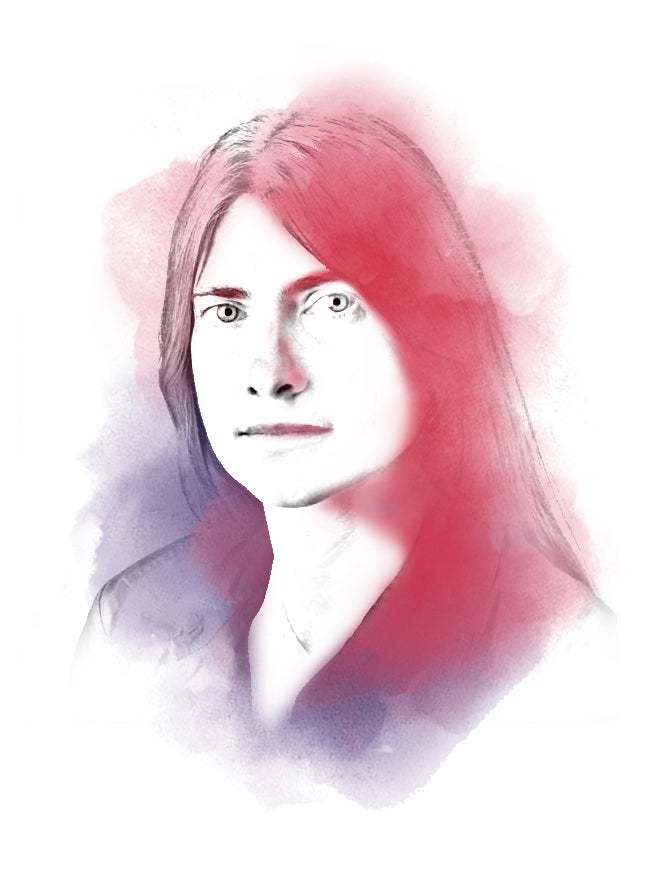 Gabriela Chiosis is a professor at the Memorial Sloan Kettering Cancer Center in New York City. She obtained a PhD in organic chemistry from Columbia University. Her early career was marked by pioneering discoveries of chemical probes and drugs, many licensed as drug candidates or diagnostics. Nonetheless, a sense of dissatisfaction with the limited understanding of the underlying processes these treatments targeted propelled her toward a new mission. Her current lab endeavors to bridge the gap between chemical innovation and a profound grasp of disease mechanisms. Focusing on the intricate contribution of internal and external stressors to diseases, her research explores these mechanisms, ranging from systems-level down to atomistic detail, unraveling their impact on cells, tissues, and organisms. These investigations go beyond conventional approaches by emphasizing the targeting of networks rather than individual proteins. Through these endeavors, her lab strives not only to uncover treatments and diagnostics but also to shape personalized approaches to treatment, thereby illuminating pathways for medical advancement.