BehaviorJanuary 5, 2018
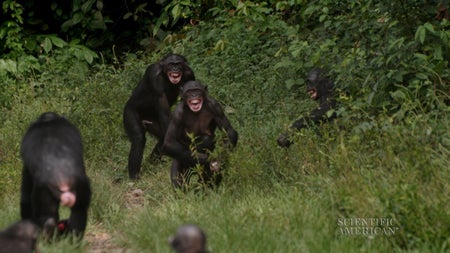
Bonobos Prefer "Jerks" over Helpers
A new study shows joining “jerks” provides unexpected benefits for bonobos.
Bonobos Prefer "Jerks" over Helpers
A new study shows joining “jerks” provides unexpected benefits for bonobos.

Looking Back at the Year in Science
Our editors recap some of the most notable science stories of 2017. Check out https://www.scientificamerican.com/article/the-top-10-science-stories-of-2017/
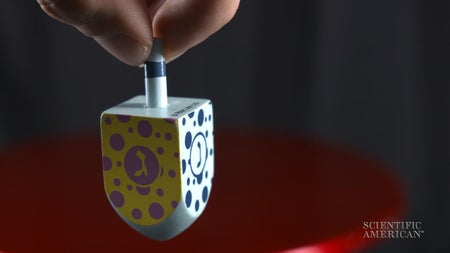
Spincredible Dreidel Tips and Tricks
Become a dreidel “spinologist” and compete for the longest time of spin.
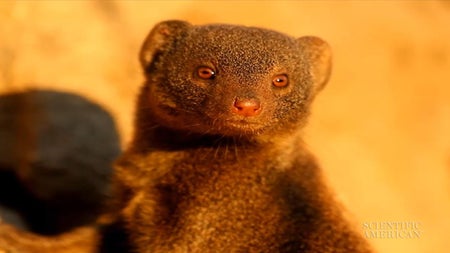
Dwarf Mongooses Struggle to Fit In and Dig In
These mammals cannot eat a lot of food when they are on their own, and spend months integrating into new groups before gaining weight.

Inflating the Universe with Prize-Winning Cosmologist David Spergel
This year’s Breakthrough Prize in Fundamental Physics was awarded to the team behind NASA’s Wilkinson Microwave Anisotropy Probe, or WMAP, a space telescope that launched in 2001 to map the cosmic microwave background—the earliest, oldest light we can detect from the universe’s infancy. The WMAP team will split the $3 million award, with its leaders receiving the largest shares. One of those leaders, WMAP’s chief theorist David Spergel, sat down to speak with Scientific American about WMAP’s science and its legacy.
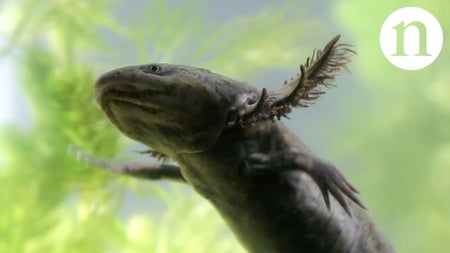
Axolotl: Saving a Strange Salamander
Axolotls are used to study cancer development and organ regeneration, but their numbers in the wild are dwindling. Conserving wild salamanders could be vital for research—and the future of this special species.
This video was reproduced with permission and was first published on November 24, 2017. It is a Nature Video production.
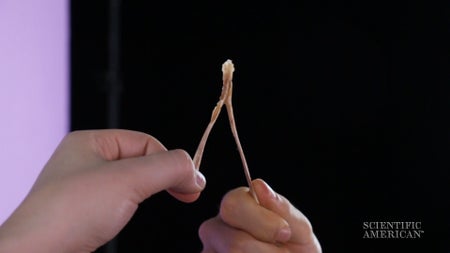
Snap, Crackle, Whop--How to Win the Wishbone
Don’t crack under pressure! Explore the scientific—and sometimes sleazy—secrets to win a wish at this year’s Thanksgiving wishbone pull.
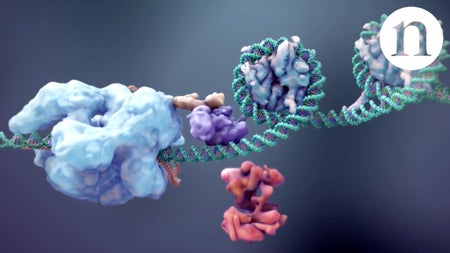
Crispr Cas9 HD final
Using the CRISPR–Cas9 system, scientists can do much more than gene editing—they can boost gene transcription or use fluorescent proteins to paint and track a chromosome. In this Nature Video animation, several innovative uses for CRISPR are outlined and explained.
This video was reproduced with permission and was first published on October 31, 2017. It is a Nature Video production.
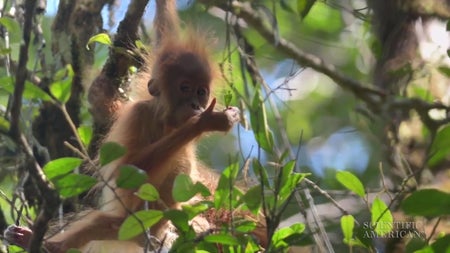
New Frizzy-Haired Orangutan Species
An isolated group of orangutans in Sumatra is the first new great ape species described since the 1920s, and could be the most critically endangered.

The Pitfalls of Growing a Monster Pumpkin
Squashing the competition at a giant pumpkin weigh-off requires patience, persistence—and a little bit of luck.

Neutron Star Collisions Create Gold
Astrophysicists searching for gravitational waves have finally learned what happens when you crash two neutron stars together--and it's very, very shiny.
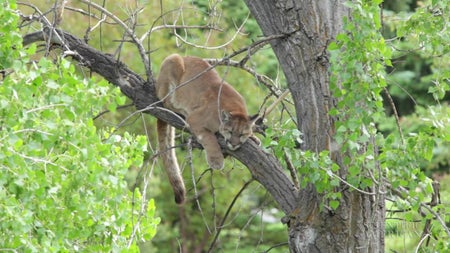
The Secret Social Life of a Solitary Puma
Hidden cameras caught these cats sharing prey with their neighbors, suggesting pumas have a more complex society than previously believed.