
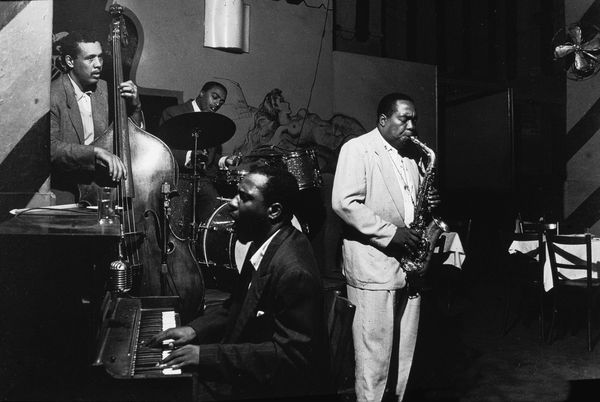
A master musician’s style can so distinct as to be instantly recognizable—sonic “fingerprints,” such as a performer’s choice of notes, chords and rhythm, can reveal the player by sound alone.
Not only are many of these fingerprints something we can hear, but the patterns are also mathematically quantifiable. Some signatures can be so subtle as to elude our senses, however. Tiny differences in the rhythmic timing of a performance or an emphasized beat, for example, may be so minuscule as to escape notice and may not show up in sheet music.
That is especially true, perhaps, in jazz. So researchers turned to artificial intelligence. In a new paper in Nature Machine Intelligence, three University of Cambridge researchers used AI to help better define the musical tics of 20 of the most celebrated jazz pianists of all time.
On supporting science journalism
If you're enjoying this article, consider supporting our award-winning journalism by subscribing. By purchasing a subscription you are helping to ensure the future of impactful stories about the discoveries and ideas shaping our world today.
The researchers trained several machine-learning models on 84 hours of recordings, including 1,629 performances by 20 famous jazz pianists, such as Chick Corea, Thelonious Monk, Oscar Peterson and Bill Evans. Those performances were then converted into a digital music format called MIDI, which can show which notes are played when and how low or high they were played on the piano keyboard.
Using those data, the researchers then tested the AI on whether it could identify who was playing using other recordings. The models fared well: One was able to identify the right musician more than 94 percent of the time. Another that was trained to spot more granular differences, such as what notes each piano player used to construct melodies and chords, was almost as accurate, identifying the musician correctly 91 percent of the time.
Understanding how these jazz greats played is valuable: it helps reveal how individual artists influenced each other and can also be used to train young musicians.
The Cambridge scientists also created a tool to enable you to hear and visualize the differences between the pianists. The web app provides handy graphs describing each player’s tendencies and provides some illustrative—and beautiful—sound samples showing how they used melody, harmony, rhythm and dynamics to create their unique sonic fingerprints.