
Scientists used artificial intelligence to generate new viruses. The landmark first could lead to new antimicrobial drugs—and may pose immense danger to human health.
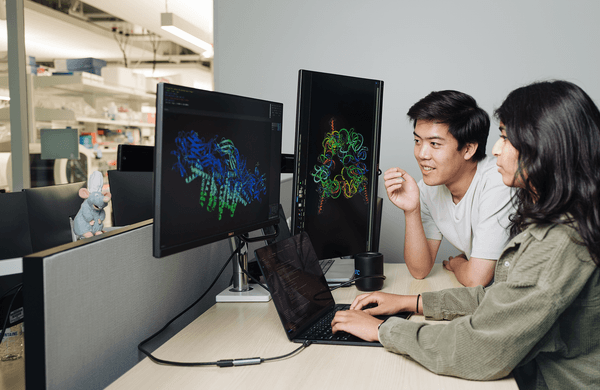
Scientists at Stanford University and the Arc Institute, a nonprofit AI and biology research organization, made the viruses using the actual genome of a bacteriophage—a type of virus that can kill bacteria—called ΦX174 (pronounced FYE-ex-174) as a template.
Using two large language models trained on the genomes of more than two million other bacteriophages, the scientists generated new, not-found-in-nature viruses. In a paper in the journal Science, they show that these viruses can kill even antibiotic-resistant bacteria.
On supporting science journalism
If you're enjoying this article, consider supporting our award-winning journalism by subscribing. By purchasing a subscription you are helping to ensure the future of impactful stories about the discoveries and ideas shaping our world today.
“In this case, we wanted the model to generate the entire genome end-to-end in a single left-to-right pass,” said Brian Hie, an assistant professor at Stanford and co-author of the paper, in a statement. “We didn’t add anything.”
Making novel genes is not new, but creating an entire functional genome is much trickier—genes have complex patterns of interaction, and all their cascading effects need to be taken into account for the result to function as a comprehensive body. A single mutation can disrupt that delicate system, making the entire thing nonviable. Simple viral genomes are a fraction of a fraction as large as a human’s, but they are still incredibly complex.
The AI models were able to come up with thousands of bacteriophage genomes, nearly 300 of which the researchers then chemically synthesized. Of these, 16 of them proved to be viable and able to kill certain strains of Escherichia coli—including strains of the bacterium that had mutated to be resistant to the original reference genome of ΦX174.
The impetus for this work, according to the researchers, is that drug-resistant bacteria are rife and growing. More than 2.8 million antimicrobial-resistant infections occur in the U.S. each year, killing more than 35,000 people on average, according to the Centers for Disease Control and Prevention. Having a drug based on the 16 phages could help fight antibiotic-resistant strains more effectively, Hie said.
“If the bacteria gain resistance to a single phage, it’s game over for the medication,” he said. “But if you have multiple genetically distinct phages in a mixture, it would be harder for the bacteria to develop resistance to the entire cocktail.”
The technology is valuable in the fight against microbial disease, but there are obvious dangers. In a piece also published by Science, Johns Hopkins University public health researchers Thomas Inglesby and Moritz Hanke pointed out that the models used in the experiment were deliberately not trained with genomic data from viruses that can infect and kill humans. Not everyone is likely to be that careful or ethical, they argued.
“This safeguard is commendable but can be partly circumvented by fine-tuning the models on pathogen data,” they wrote. “Whether this would be easy and to what degree it could reverse the effects of pretraining data exclusion are open questions.”
They argued that to prevent the technology being used to generate viruses that can hurt or kill humans, new oversight measures are desperately needed. That might include policies from both the National Institutes of Health and multinational organizations such as the World Health Organization to ensure the tool remains under wraps.
“The question is no longer whether generative viral genome design will exist,” Inglesby and Hanke wrote. “It is whether society can build oversight that allows its benefits to unfold while preventing it from enabling serious harm.”