
The beleaguered private moon lander Peregrine, which suffered a fuel leak shortly after its launch last week, is now on a collision course with Earth, its builder said Saturday (Jan. 13).
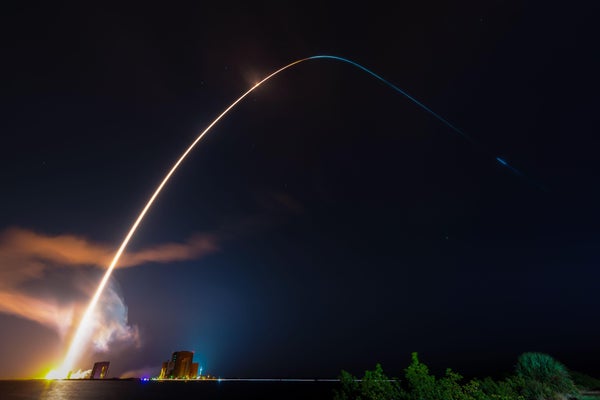
Peregrine launched toward the moon on Jan. 8 atop a United Launch Alliance Vulcan Centaur rocket, but suffered a critical fuel leak shortly after separating from the booster. That loss of fuel doomed Peregrine's chances to soft-land on the moon next month, according to its builder Astrobotic. While the company has been fighting to keep the lander alive as long as possible, the probe's days are definitely numbered due to its trajectory, Astrobotic said.
"Our analysis efforts have been challenging due to the propellant leak, which have been adding uncertainty to predictions of the vehicle's trajectory," Astrobotic wrote in an update on X (formerly Twitter) on Saturday. "Our latest assessment now shows the spacecraft is on a path towards Earth, where it will likely burn up in Earth's atmosphere."
On supporting science journalism
If you're enjoying this article, consider supporting our award-winning journalism by subscribing. By purchasing a subscription you are helping to ensure the future of impactful stories about the discoveries and ideas shaping our world today.
Astrobotic did not include an expected date for when Peregrine could slam into Earth's atmosphere, though the Pittsburgh-based company's engineers continue work to salvage the spacecraft.
"The team is currently assessing options and we will update as soon as we are able," Astrobotic wrote in the update. On Sunday, Peregrine was about 242,000 miles (389,000 kilometers) from Earth, just beyond the orbit of the moon, which circles Earth at about 238,000 miles (384,400 km).
Astrobotic's Peregrine lander is the first U.S. private moon lander ever to launch and the first to carry NASA experiments and commercial payloads to the moon, as well as the first mission to fly under NASA's Commercial Lunar Payloads Services program. It is carrying five NASA experiments and 15 other payloads for a variety of customers, including human remains intended for a moon burial for the companies Celestis and Elysium Space.
The Peregrine lander was slated to attempt its moon landing on Feb. 23, but the fuel leak made that impossible, Astrobotic said as the situation developed. In recent days, the leak has slowed, allowing engineers to extend its life.
"The propellant leak has slowed considerably to a point where it is no longer the team's top priority," Astrobotic said in its update, adding that a soft moon landing was still not possible.
Astrobotic officials and NASA are expected to hold a press conference on Thursday (Jan. 18) to discuss the mission's status.
Copyright 2023 Space.com, a Future company. All rights reserved. This material may not be published, broadcast, rewritten or redistributed.