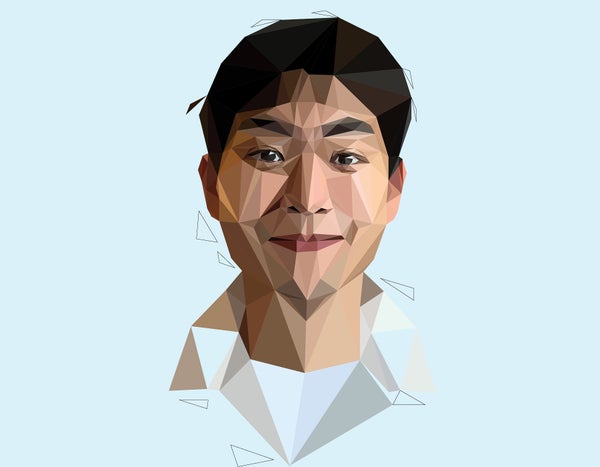
Alex L. Zhang was 13 years old when he published a video game that went viral. More than 100,000 people bought the game for $1 to $3 each—a solid income for a middle schooler.
Zhang is now a graduate student at the Massachusetts Institute of Technology working on artificial intelligence. He took a winding path to get there. As an undergraduate at Princeton University, he studied quantum mechanics, political science and pure math. He did research in an AI lab, but several of his projects failed. In 2024, however, six weeks into his first year of graduate school, he wrote a blog post that became a sensation in the AI community. In it, he introduces the concept of recursive language models, or RLMs. RLMs solve something AI researchers call context rot.
On supporting science journalism
If you're enjoying this article, consider supporting our award-winning journalism by subscribing. By purchasing a subscription you are helping to ensure the future of impactful stories about the discoveries and ideas shaping our world today.
“If I have my language model, my ChatGPT,” Zhang explains, “and I know my language model can do task A and also task B, there’s this odd phenomenon where if I give it task A and task B at the same time, performance is worse than if I were to give them separately.” RLMs work around context rot by enabling a model to invoke other instances of itself—as if ChatGPT were opening other ChatGPT windows to assign them tasks. When the AI gets the results back from various sessions, it combines them.

Tony Luong
Zhang is now developing RLMs from proof of concept into trained systems. He’s also exploring whether small language models using RLMs could rival immense frontier AI systems—the most advanced models, such as Anthropic’s Claude. He expects new models to start having an effect within a year. He thinks AI is transformative, but there are a lot of issues that must be addressed for it to do the most good. Government regulation is necessary. So is open-source AI development.
“The types of research that I want to work on are things that I think should be shared for the benefit of people in general,” Zhang says.
This article is part of “The Young American Scientists,” an editorially independent project that was produced with financial support from Regeneron. Special thanks to the Museum of Science in Boston, where Zhang's portrait and video interview were captured.