
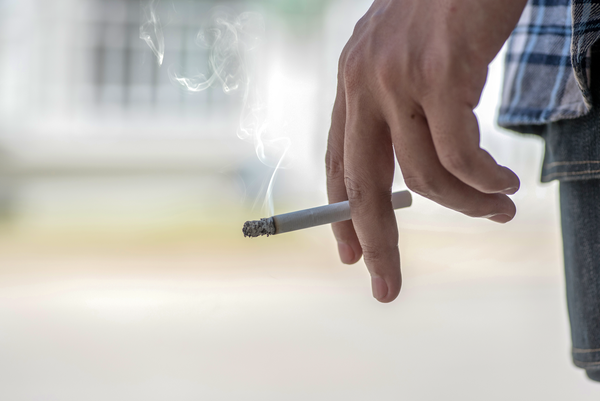
Nearly 50% of cancer deaths worldwide are caused by preventable risk factors, such as smoking and drinking alcohol, according to the largest study of the link between cancer burden and risk factors.
Using estimates of cancer cases and deaths from more than 200 countries, researchers found that avoidable risk factors were responsible for nearly 4.5 million cancer deaths in 2019 (see ‘Global cancer deaths’). That represents more than 44% of global cancer deaths that year. Smoking, alcohol use and a high body-mass index (BMI) — which can be indicative of obesity — were the biggest contributors to cancer.
The findings, published in The Lancet on 20 August, largely confirm results from smaller studies and highlight how reducing exposure to risk factors could help to prevent a substantial proportion of cancers, says Rudolf Kaaks, a cancer epidemiologist at the German Cancer Research Center in Heidelberg. The take-home message is simple: “Don’t smoke,” says Kaaks. “Don’t get overweight, and don’t drink too much alcohol.”
On supporting science journalism
If you're enjoying this article, consider supporting our award-winning journalism by subscribing. By purchasing a subscription you are helping to ensure the future of impactful stories about the discoveries and ideas shaping our world today.
Heavy burden
The true number of cancer cases and deaths worldwide is hard to pin down, because some countries do not record such data, says study co-lead author Justin Lang, an epidemiologist at the Public Health Agency of Canada in Ottawa. To overcome this, Lang and his colleagues used data from a study looking at death and disability from more than 350 diseases and injuries in 204 countries. From those data, they estimated the impact of 34 risk factors on poor health and deaths from 23 types of cancer (see ‘Cancer deaths by tumour type’).
In 2019, half of all male deaths from cancer, and more than one-third in women, were due to preventable risk factors including tobacco and alcohol use, unhealthy diets, unsafe sex and workplace exposure to harmful products, such as asbestos. From 2010 to 2019, global cancer deaths caused by these risk factors increased by about 20%, with excess weight accounting for the largest percentage of increase — particularly in lower income nations.
“These results, in combination with local knowledge, may be useful for policymakers in determining what modifiable risk factors to target in cancer-control planning efforts,” says study co-author Kelly Compton, a project officer at the University of Washington’s Institute for Health Metrics and Evaluation (IHME) in Seattle.
Smoke-free policies, increased taxes on tobacco and advertising bans have proved effective in diminishing exposure to smoking, and similar efforts have been recommended to help reduce excess alcohol use, says co-senior author Lisa Force, who studies cancer burden and health metrics at the University of Washington.
Future research
The study did not include some other known risk factors for cancer, including exposure to ultraviolet (UV) radiation and certain infections. Although the researchers used ‘unsafe sex’ as a proxy for cancer risks associated with human papillomavirus (HPV) and other sexually transmitted viruses. Cervical cancer, which is caused by certain strains of HPV, is the leading cause of cancer deaths among women in sub-Saharan Africa. There, Kaaks says, “a huge part of cancer incidence and mortality in women could be decreased by timely HPV vaccination”.
The team might include risk factors such as infections and exposure to UV radiation in future analyses, once more data — for example about levels of exposure to those factors — are available, says co-author Jonathan Kocarnik, who models global cancer burden at IHME.
Future work could help to evaluate the effects of the COVID-19 pandemic on cancer cases and deaths. A 2020 study2 estimated that, by 2025, there will be more than 3,000 avoidable cancer deaths in England as a result of diagnostic delays because of COVID-19. In some areas, Kocarnik says, the pandemic might have changed people’s exposure to certain risk factors: for example, workplace exposure to harmful products might have decreased during lockdowns. However, he adds, “potential changes in risk-factor exposures and the impact on future cancer burden will likely take many years to comprehensively understand”.
This article is reproduced with permission and was first published on August 31 2022.