
Ancient Britons may have built a “prototype” of Stonehenge, a prehistoric megalith in England that is one of the marvels of the world. At least, that’s what a new analysis of separate ruins found just down the proverbial road from the more famous archeological site seems to indicate.
Located some five kilometers from Stonehenge in the village of Bulford, the site was first excavated between 2015 and 2017. The dig revealed 48 pits, and using carbon dating, researchers found that they were created around the year 2950 B.C.E.—about 500 years before Stonehenge was completed.
All that’s left of this earlier and simpler monument are those pits, but 5,000 years ago the structure likely centered on two wooden poles stationed 120 meters apart and positioned so they formed a line pointing directly at the sun as it rose during the summer solstice and as it set during the winter solstice.
On supporting science journalism
If you're enjoying this article, consider supporting our award-winning journalism by subscribing. By purchasing a subscription you are helping to ensure the future of impactful stories about the discoveries and ideas shaping our world today.

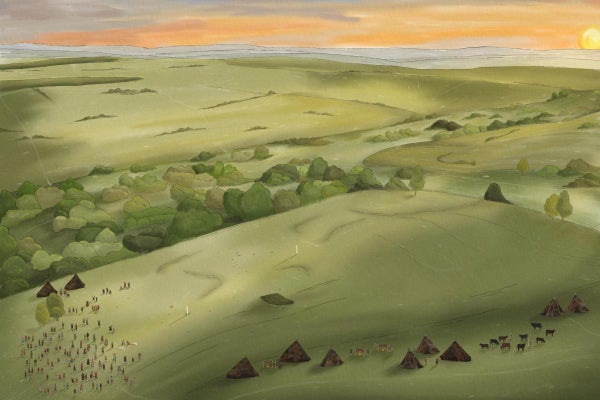
Timeline of summer solstice celebrations as they might have appeared at Bulford 5,000 years ago.
Wessex Archaeology
That led a team of researchers at Wessex Archaeology, led by British archaeologist Phil Harding, to conclude they likely functioned as a sort of design prototype for the more famous megalithic structure. The analysis revealed the alignment with the solstices was so exact that they would have been aligned to within one degree of the sun. The team hasn’t published the findings in a peer-reviewed scientific journal yet but expects to do so later this year.
“This discovery is probably one of the greatest finds of my career and what makes it so important is just how early it is,” Harding said in a statement. “Up till now, our knowledge of this ancient feat of astronomy was based on Stonehenge and other monuments of a similar period, but what we’ve discovered at Bulford is 500 years earlier than the famous stones we know so well.”
Along with the pits, the researchers have found artifacts such as pottery, animal bones and charcoal at the site, indicating that ancient people likely gathered there to celebrate religious rituals tied to the solstices. Because the site dates to about the same time as when the first earthworks at Stonehenge were built, the archaeologists believe it may have functioned as a temporary ritual site until the more permanent Stonehenge stones were put in place.
“This discovery helps us understand Stonehenge not as a singular creation, but as part of a much longer conversation between people, the land, and the sky,” said Fabio Silva, an archaeologist at the Skyscape Academy, who reconstructed the ancient sky and landscape to show that the structure would have aligned with the solstices, in the same statement.
“The alignment shows that communities were already engaging with both the summer and winter solstices in the Stonehenge landscape, centuries before the sarsen stones were raised. Rather than marking the beginning of a story, Stonehenge now more clearly appears to have emerged from traditions and practices with much deeper roots in this landscape,” he said.