
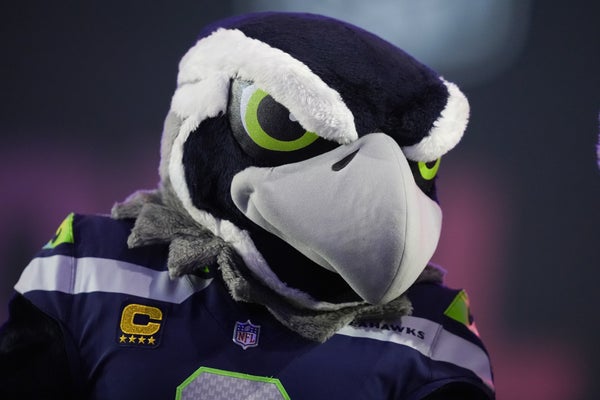
For the first time in more than a decade, the Seattle Seahawks are playing in the Super Bowl—but what exactly is the team’s mascot? There’s no one bird officially dubbed the seahawk, but a few different species have taken on the nickname. Meanwhile the team’s imagery and live animals at events seem to portray different bird species entirely.
The history of the name dates back to 1975, when fans suggested the “Seahawks” appellation for the city’s then-nameless team that would begin playing the next year. According to the government of Anacortes, Wash.—a city north of Seattle that claims to be the original home of the name seahawk for its high school mascot—the name arose as a nickname for the osprey because of its talons that are uniquely fit to catch fish. Ospreys go by other names, too, including river hawk and fish hawk, and they “embark on these long, arduous journeys and have to survive a lot of obstacles,” says Robert Domenech, executive director of the Raptor View Research Institute in Montana. “The Seahawks have had to survive and overcome lots of challenges and adversities to be able to make it to the Super Bowl, much like an osprey.”
Skuas, large predatory birds from the North Atlantic, have been referred to as seahawks as well. This species is known for its broad shoulders and its habit of aggressively attacking other birds—perhaps providing some inspiration for the team’s players as Sunday approaches. Skuas, however, are not technically hawks, because they don’t seize and grasp prey with their feet, Domenech says.
On supporting science journalism
If you're enjoying this article, consider supporting our award-winning journalism by subscribing. By purchasing a subscription you are helping to ensure the future of impactful stories about the discoveries and ideas shaping our world today.
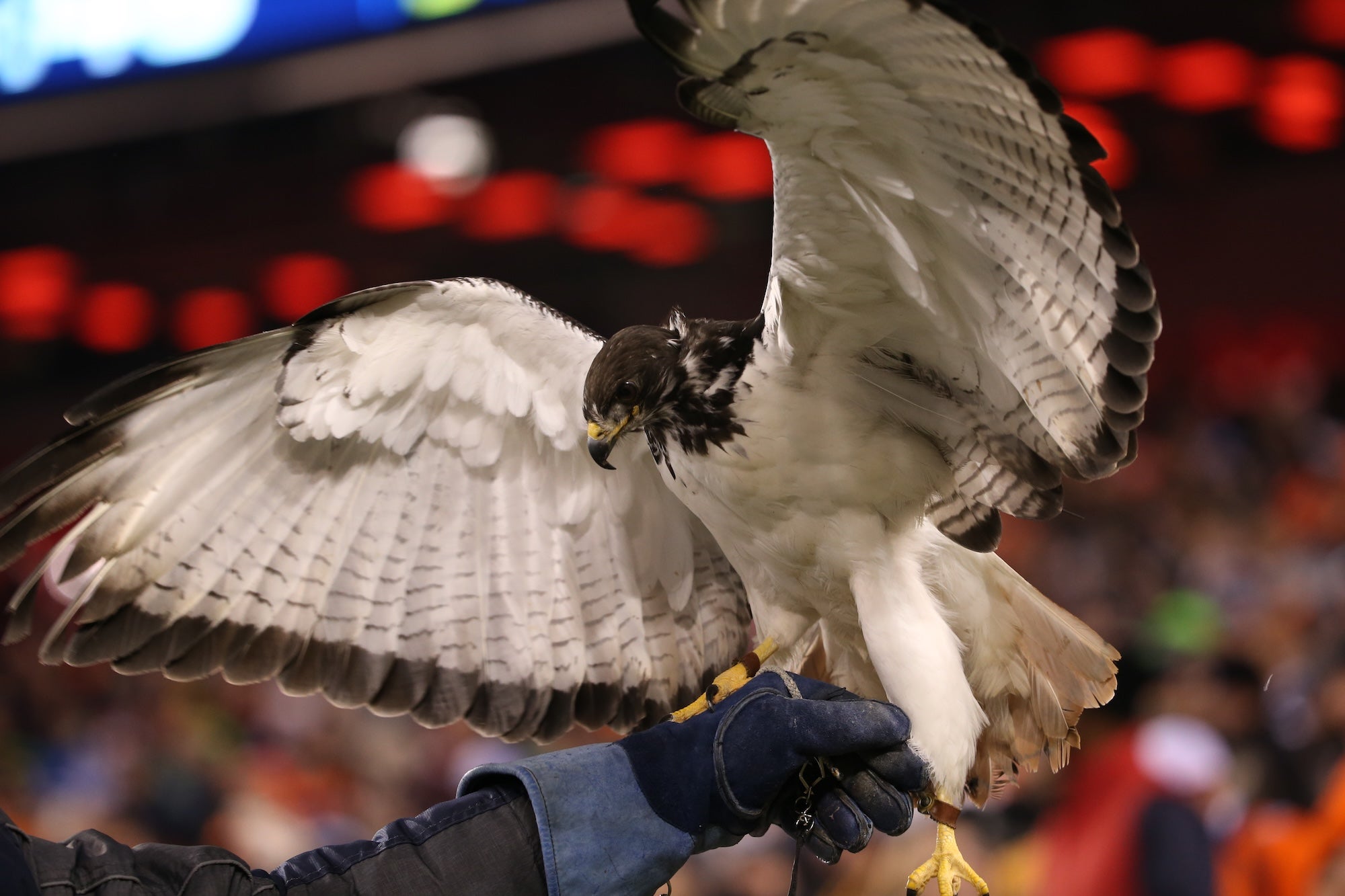
The Seattle Seahawks live mascot, an Augur Hawk, opens his wings on the sidelines during Super Bowl XLVIII between the Denver Broncos and the Seattle Seahawks at MetLife Stadium on February 2, 2014, in East Rutherford, N.J.
Tom Hauck/Getty Images
So do Ospreys or Skuas appear as the Seahawk mascot? The answer seems to be no: all different types of birds are used in the team’s imagery. The blues and greens of the Seahawks’ logo don’t match either species, with some saying the art instead nods to the brightly colored ceremonial masks of Seattle’s Indigenous communities. One ornithologist noted in 2015 that the logo looks strikingly similar to sea eagles, a group of birds including the bald eagle—the mascot for the 2025 Super Bowl–winning Philadelphia Eagles.
A live bird named Taima can be seen at some Seahawks games, but he is in fact an Augur Hawk, which could be because it’s illegal to use ospreys for commercial purposes. And finally, the Seahawks’ official costumed mascot, Blitz, does have an online profile to go by, but he claims no species—only that he’s 6’1” and loves reading, fitness and bird-watching.