
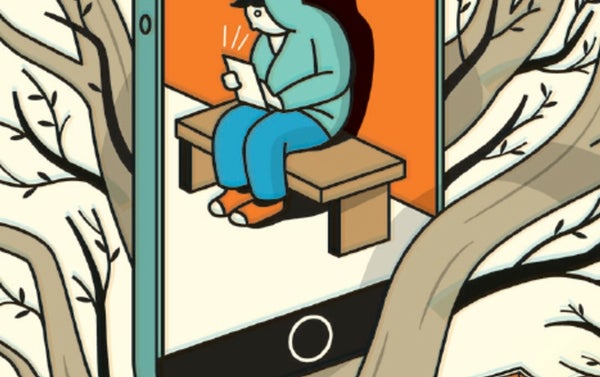
You've met the cluck-cluckers—the people who automatically decry every new technology. “All this newfangled gadgetry is rotting our brains,” they say, “and ruining our kids.”
Every older generation disapproves of the next; that's predictable and human. Apparently digital devices are ruining our youth, just the way that rock music ruined their parents, and television ruined their parents and motorcars ruined theirs. So I guess we've been ruined for generations.
But I got to wondering: What does science say about the ruinous effects of the latest technology?
On supporting science journalism
If you're enjoying this article, consider supporting our award-winning journalism by subscribing. By purchasing a subscription you are helping to ensure the future of impactful stories about the discoveries and ideas shaping our world today.
Part of the answer depends on your definition of “ruining.” True, things are different now. Most American kids no longer “go outside and play,” unattended, for hours (the stickball industry may never recover). Students no longer need to memorize the presidents and the periodic table, because Google is just a keystroke away. We are also losing old skills. Few kids know how to use carbon paper or tend horses; handwriting and driving skills may be next.
Still, different is not the same as worse. And, as I discovered, it's surprisingly difficult to find studies linking modern gadgets (touch screen tablets and smartphones) to the ruination of youth. Research takes time, and the touch screen era is very young. Nobody had ever even seen an iPad, for example, until 2010.
There is, however, early research out—and it provides some insight into how these suddenly ubiquitous gadgets might be affecting kids. One study, published in the February 2015 issue of Pediatrics, found that children who sleep near a small screen get an average of 21 fewer minutes of sleep than kids without gadgets in their rooms. (As for the reason: the researchers suppose that kids are staying up late to use their gadgets, or maybe light from the screen produces “delays in circadian rhythm.”)
What about social skills? A 2014 study at the University of California, Los Angeles, examined 51 sixth graders who spent five days at a nature camp without electronics and 54 who did not. Afterward, the first group did better at reading human emotions in photographs.
Then there was a 2009 Stanford University study, which linked the modern teenager's multitasking computer habits (which would seem to carry over to phones and tablets) with the loss of the ability to focus. That one's a little scary.
What about brain cancer from cell phones? Surely it's bad for these kids to have a radio antenna plastered to their head all day! Well, first of all, if you know any kids, you don't need a study to tell you that they very rarely do put their phone to their head; they would far rather text than make phone calls. And anyway, studies haven't found any link between cell-phone use and cancer.
Time to start cluck-clucking? Not necessarily; not all the studies draw distressing conclusions. In 2012 the nonprofit tech review group Common Sense Media found that more than half of American teens feel that social media—now accessibly anywhere thanks to touch screens—has helped their friendships (only 4 percent report that it has hurt). In 2014 the U.K.'s National Literacy Trust found that poor children with touch screen devices at home are twice as likely to read every day. Also, a study published in Computers in Human Behavior found that texting is beneficial for the emotional well-being of teenagers—especially introverts.
Clearly, we still need broader, longer-term studies before we begin a new round of cluck-clucking. And they are coming; for example, results of a huge British survey of 2,500 children called SCAMP (Study of Cognition, Adolescents and Mobile Phones) will arrive in 2017.
In the meantime, the warning bells raised by early research are not loud enough to make us rip our kids' touch screens away and move to Amish country. Yet they are already enough to suggest practicing a very wise, ancient precaution: moderation. Too much of anything is bad for children—whether it is modern electronics, watching TV or playing stickball.