
CLIMATEWIRE | A group of the nation’s health experts will regularly meet this spring and summer in an effort to better protect farmworkers from extreme heat and wildfire smoke.
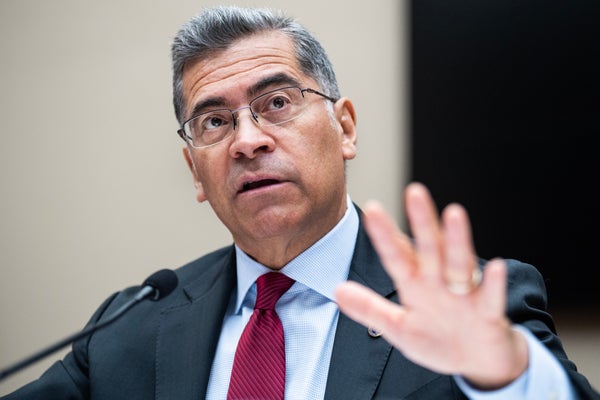
The new initiative is the brainchild of Department of Health and Human Services Secretary Xavier Becerra, whose father picked crops in California farm fields.
“This is personal to me because my father was a farmworker and had to work out in those conditions,” Becerra said during a press conference this week about President Joe Biden’s proposed budget. “There is no one in America who should have to die because of exposure to heat and smoke, but more and more, it is getting to that point."
On supporting science journalism
If you're enjoying this article, consider supporting our award-winning journalism by subscribing. By purchasing a subscription you are helping to ensure the future of impactful stories about the discoveries and ideas shaping our world today.
Agriculture workers are particularly vulnerable to the health effects of heat and smoke. Outside activities such as digging irrigation ditches and picking crops can raise body temperatures and increase respiratory rates, making workers more susceptible to heat stroke.
According to data kept by the Department of Labor, heat exposure kills an average of 33 workers per year.
Becerra’s so-called Initiative on Protecting Farmworkers from Extreme Heat and Wildfire Smoke had its first meeting late last week and will convene regularly between March and December 2024. The group includes representatives from the Centers for Disease Control and Prevention, National Institutes of Health, Office of the Assistant Secretary of Health, Administration for Strategic Preparedness and Response, Substance Abuse and Mental Health Service Administration, Office of Minority Health and other institutes throughout the department.
HHS spokesperson Kim Seigfreid said, “HHS wants to be proactive and ambitious in our actions to protect farmworkers and their families, particularly given the vital work our farmworkers do to feed this country through pandemics, storms and heat waves."
There is no federal regulation specifically protecting workers from heat or smoke, despite the rising risks of climate change. The only states with protections for workers are California, Oregon and Washington. Those states, along with Colorado and Minnesota, also have heat protections.
It's unclear what steps HHS will take to better protect farmworkers from heat and wildfire smoke. But the department has been concerned about workers’ exposure to heat for decades, with the CDC’s National Institute for Occupational Safety and Health first recommending that the Occupational Safety and Health Administration write heat-specific protections for workers back in 1975.
The agency has made similar recommendations twice since then, including in a 200-page report released in 2016 that included new research on how heat stress presents itself in laborers. The report also expressed concern about the effect of future global warming.
OSHA has yet to accept those recommendations. The agency has been working on regulations that would require employers to protect workers from heat for more than two years. The agency has no estimate of when that rulemaking would be finalized.
Juley Fulcher, a worker advocate with Public Citizen, said that even without federal regulations in place, HHS could help protect workers from wildfire smoke and heat by training medical professionals and emergency response professionals about signs of heat stress and how to treat it.
She also argued that the federal government needs to collect better data around workplace injuries and illnesses from heat and smoke. Fulcher added that any HHS efforts that are focused on data collection could help “tremendously improve our knowledge of how heat stress effects workers and inform research.”
“They don’t write regulations, but there are things they can do that are obviously valuable,” she said.
Reprinted from E&E News with permission from POLITICO, LLC. Copyright 2024. E&E News provides essential news for energy and environment professionals.