

Adding up all of the mass in every asteroid in our entire solar system totals only less than the mass of our Moon. Despite their small physical size, however, these space rocks offer important clues as to how our solar system formed. The terms asteroid, meteor, meteorite, and even comet are often used interchangeably...but what is the difference?
What is an asteroid?
On supporting science journalism
If you're enjoying this article, consider supporting our award-winning journalism by subscribing. By purchasing a subscription you are helping to ensure the future of impactful stories about the discoveries and ideas shaping our world today.
Asteroids are rocky objects smaller than planets that are left over from the formation of our solar system. When the cloud of gas and dust collapsed to form our Sun, much of the remaining material went into forming the rocky terrestrial and gas giant planets orbiting our star. Smaller dust fragments that never made their way into planets are left behind as asteroids.
What is a comet?
Comets are also composed of material left over from the formation of our solar system and formed around the same time as asteroids. However, asteroids formed toward the inner regions of our solar system where temperatures were hotter and thus only rock or metal could remain solid without melting. Comets formed at farther distances from the Sun, beyond what we call the frost or snow line and past the orbits of Mars and Jupiter, where temperatures were low enough for water to freeze.
What is a meteor and a meteorite?
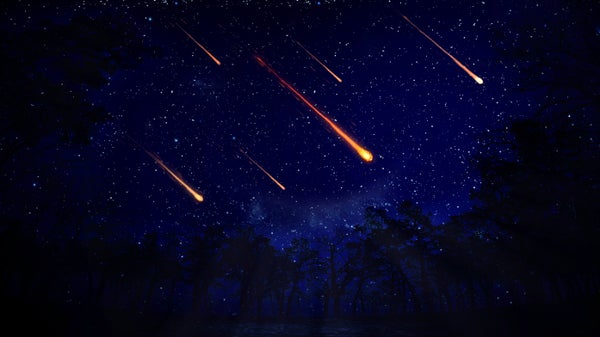
A meteor is simply an asteroid that attempts to land on Earth but is vaporized by the Earth’s atmosphere. The resistance on the rock due to the Earth’s atmosphere causes its temperature to rise. We sometimes see the glowing hot air created by these burning meteors and dub them “shooting stars.” Meteor showers occur when the Earth passes by many meteors at once. For example, if chunks of a comet melt off as it passes close to the Sun, this debris can be left behind to later dazzle us Earthlings with a meteor shower.