
By Colin Packham
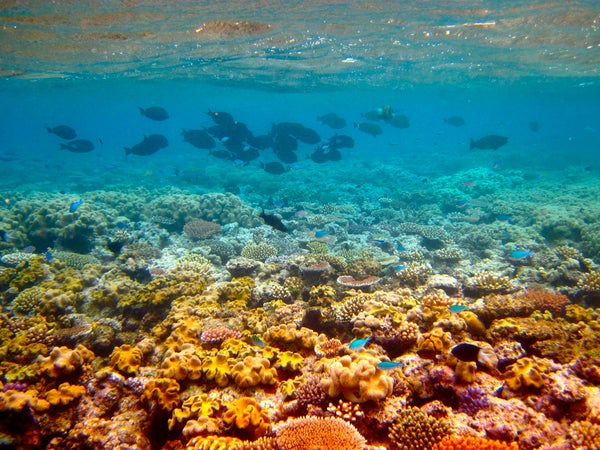
SYDNEY, Dec 2 (Reuters) - Australia will spend A$1.3 billion ($965.3 million) in the next five years to improve the water quality and wellbeing of the Great Barrier Reef to prevent the World Heritage Site being placed on the United Nation's "in danger" list.
But activists say the money - in addition to the A$1 billion fund announced earlier - is insufficient and want the government to take more concrete action to protect the reef.
On supporting science journalism
If you're enjoying this article, consider supporting our award-winning journalism by subscribing. By purchasing a subscription you are helping to ensure the future of impactful stories about the discoveries and ideas shaping our world today.
A negative rating for the Great Barrier Reef - located off the country's north east coast - would be embarrassing for the Australian government and damage its lucrative tourism industry.
In the first progress report to the UN's scientific arm, UNESCO, after it stopped short earlier this year of listing the reef as "in danger", Australia said it would spend A$1.3 billion improving the world's largest living ecosystem.
Australian Prime Minister Malcolm Turnbull pledged a A$1 billion fund for the Great Barrier Reef in June.
Much of the accelerated spending will address water quality and ecosystem health, Australia said in the UNESCO report, including programmes to minimise spillage of chemicals from farming and tightening oversight of connected waterways.
UNESCO will now consider the progress but if it is not satisfied with Australia's performance, it could place the Great Barrier Reef on the "in danger" list.
"This report will hopefully see Australia stay off the UNESCO in danger watch list," said Josh Frydenberg, Australia's minister for the environment and energy.
Environmental groups, which believe the reef needs more investment than the government has committed to, criticised the progress report, coming just days after confirmation of significant damage.
"It is unacceptable that this government is now congratulating itself over its handling of the reef's health during that same period without promising any meaningful improvement," said Shani Tager, reef campaigner, Greenpeace Australia.
Earlier this week, Australian scientists said two-thirds of a 700-km (435 miles) stretch of coral within the Great Barrier Reef has been killed in the past nine months, the worst die-off ever recorded on the World Heritage site.
Their finding of the die-off in the reef's north is a major blow for tourism at the reef which, according to a 2013 Deloitte Access Economics report, attracts about A$5.2 billion ($3.9 billion) in spending each year.
Climate scientists argue that increased carbon dioxide in the atmosphere traps heat radiating from earth, creating global warming and damaging coral. Australia is one of the largest carbon emitters per capita because of its reliance on coal-fired power plants for electricity.