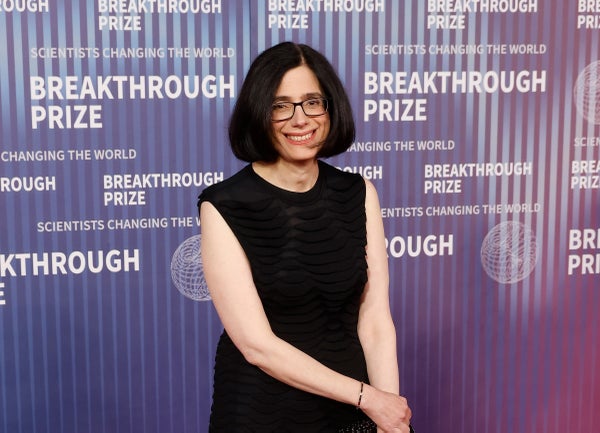
Aviv Regev is a computational biologist who leads Genentech Research and Early Development. Previously a professor at the Massachusetts Institute of Technology and a leader at the Broad Institute of M.I.T. and Harvard University, her research has advanced single-cell genomics, systems biology and large-scale efforts to map human cells.
[This interview was edited for length and clarity.]
How would you describe the current state of American science?
On supporting science journalism
If you're enjoying this article, consider supporting our award-winning journalism by subscribing. By purchasing a subscription you are helping to ensure the future of impactful stories about the discoveries and ideas shaping our world today.
We are at an exciting inflection point in the history of health care. The combination of artificial intelligence, data, large-scale lab experiments and the ability to measure human biology are driving unprecedented insights and innovation in biology, drug discovery and medicine.
We now have the experimental capabilities to gather very large, high-resolution, rich datasets and build deeply informative resources to drive biomedicine forward. Those rich datasets are ideally deeply integrated with AI, which can help analyze the data and fill in the gaps in what it is possible to capture experimentally and can also guide the iterative generation of additional data to gradually get to better and better models.
For example, single-cell genomics allows us to understand the molecular composition and classification of individual cells, which we can then use to build a reference such as the Human Cell Atlas. As we gather more and more data about cells—the basic unit of life—we can use that to build a “virtual cell” model of how cells behave, and understand how they might behave differently in the context of disease or therapy.
At the same time, we can use AI to power every stage of drug discovery, from the early stages as I just described of understanding the biology to developing the ideal medicines to target the pathways underlying disease and assessing their safety.
What needs to change in American science?
Basic research into foundational scientific problems is critical for innovation, and sufficient stability is important for open-ended innovation. Scientists are less likely to take risks if the environment is unstable, and science thrives in settings that prioritize open exploration—first, because the space of scientific possibilities is so large and, moreover, because applied approaches often set a bar that is too restrictive for early discoveries.
As academia and industry are part of the same scientific ecosystem and cross-fertilize each other, we are closely watching any changes that are happening.
What gives you optimism right now?
In the 1970s, the greatest revolution in science was molecular biology. When Genentech was founded 50 years ago, in April 1976, we pioneered recombinant DNA technology, and it changed the world by making the “impossible” medicines of that era a reality.
Today we are in the midst of the next great revolution, where generative AI is becoming the new language of science, including drug discovery. Since 2020 we have made AI part of our foundation, engrafting AI and data onto our scientific expertise and bringing our expertise to innovate in AI for science. This approach will fundamentally disrupt the success rates of drug development, allowing us to deliver benefits to patients at a scale and speed that was previously unimaginable.
What’s your best advice for an early-career scientist?
I often like to give the “nonadvice advice”: There are many ways to find your path, and no one knows the answer better than you do because you know yourself the best. So take all advice and especially the “common wisdom” with a grain of salt. Seek a lot of information, then make your own path.
What has worked for me in my career is to follow the things that interested me, wherever they may lead. I never thought I would study biology. But because the first biology courses I took at university were based in math and computation, I ended up applying this lens to biology. I followed my interests throughout my training and in my own academic lab. Much later, because I wanted to make a direct impact on patients’ lives, I moved from academia to industry.
I also encourage myself to listen to my frustrations. Frustration is a complex emotion that arises when we feel something can happen (the positive side) but it is not happening (the negative side). I like to anchor on the positive side: if I am frustrated, it means something good can happen, and I listen to my frustration in order to find a way to make that a reality. I found that especially important in moments of great scientific opportunity that was just becoming within reach, as has been the case in the early days of single-cell genomics or generative AI.
How has your field changed in the past few years?
The core challenge of drug R&D is that the space of possibilities is huge: about 10,000 diseases, 20,000 genes in the genome, trillions of cells in the human body, 1060 hypothetical small molecules with druglike properties, and the list goes on. This number of possibilities can never be tested in a lab one by one—or in a human population. As a result, in the past, we had to choose a handful of options. And more often than not, we made the wrong choice, leading to failure. In those rare cases when we succeed, there is great benefit for patients.
This is changing because of the ability to operate on a radically different scale—one that matches the scale of the problem. First, we can increasingly collect data today that are orders of magnitude more [numerous] than in the past. And future research labs will not just be automated but even autonomous. Although this is still far fewer than the number of possibilities, data like these are large enough to make it possible to train large-scale AI models. Second, we know from many domains that an AI model trained with large-enough data can fill in the blanks or even generalize to all of those things we could not test and measure. Once we iterate between them, leveraging the model to propose the next experiments, we can tackle this fundamental challenge.
We’re now in an era where we can do biology and drug discovery at scale. This will revolutionize our ability to deliver new medicines for patients, regardless of the disease they have.