
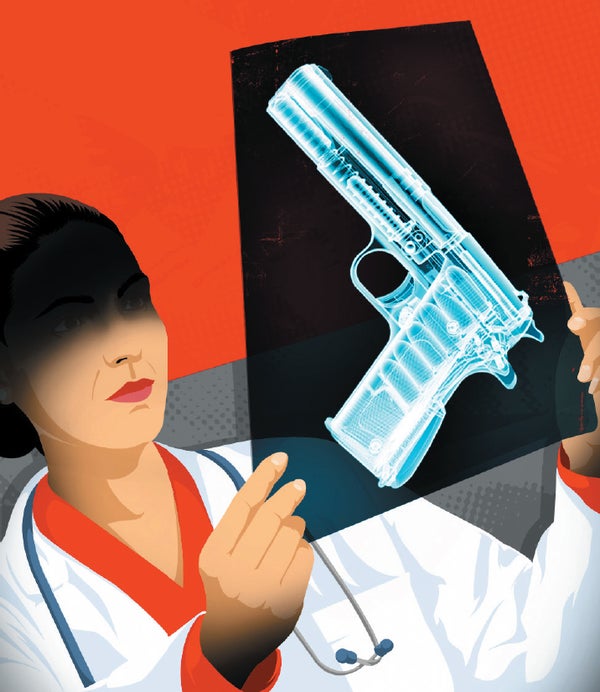
In Baltimore, violence has become a near-daily occurrence. In 2015, for example, this city of more than 620,000 people saw 344 homicides. But by tackling violence as a public health issue, Baltimore is forging a new model for how to keep citizens safe.
In 2007 the city launched its Safe Streets program, modeled after the Cure Violence program in Chicago. Targeting high-risk youth, Safe Streets hires “violence interrupters” to mediate conflict before it has the chance to escalate into violence. These interrupters have often been incarcerated themselves in the past, which brings credibility and experience to their work on the streets.
In 2014 Safe Streets workers had 15,000 encounters with the public and mediated 880 conflicts, more than 80 percent of which were deemed to be likely or very likely to result in gun violence. Three of four program sites saw significant reductions in gun violence; homicides dropped by 56 percent in one neighborhood and by 26 percent in another. Surveys show that people in the program were significantly less likely to find it acceptable to use a gun to settle a conflict, compared with peers in other neighborhoods that did not have the program.
On supporting science journalism
If you're enjoying this article, consider supporting our award-winning journalism by subscribing. By purchasing a subscription you are helping to ensure the future of impactful stories about the discoveries and ideas shaping our world today.
This year Safe Streets will expand to several Baltimore hospitals, where interrupters will help victims of violence—who are themselves often participants in dangerous conflicts—address the trauma they have experienced and navigate reentry into their communities. Although studies to date are small, evidence suggests that people enrolled in this kind of program are three times less likely to be arrested for a violent crime in the future.
But Baltimore's efforts go even further by dealing with factors that contribute to conflict—starting with one of its greatest contributors: addiction. More than 80 percent of individuals in jails have used illegal substances, and more than 30 percent were under the influence of drugs at the time of their offense.
Over the past year Baltimore has led one of the most aggressive opioid overdose prevention campaigns in the country. In October 2015 the Baltimore City Health Department declared overdose to be a public health emergency and issued a blanket prescription for naloxone—the lifesaving drug that reverses the lethal effects of opioids—for every one of the city's residents. The health department trained more than 8,000 people to use naloxone in 2015—in jails, public housing, bus shelters, street corners and markets.
The focus on preventing overdose is combined with a citywide commitment to better access to quality, on-demand drug treatment services and long-term recovery support. Recovery requires medication-assisted treatment, psychological support and wraparound services, which get teachers, clergy and other community members involved in supporting drug abusers. The health department has started a 24/7 hotline that connects people to mental health and substance abuse treatment. It has also launched a public education campaign, “Don't Die,” to educate citizens about overdose.
But intervening on the front end does not stop at addiction; the roots of violence often begin much earlier, in inequalities that have been present from early childhood and even birth. A decade ago the city's infant health ranked among the poorest in the country, with enormous disparities between black and white birth outcomes. In response, the health department led the creation of an evidence-based initiative, B'More for Healthy Babies, that offers extensive support services to mothers and that sends nurses and counselors on home visits to low-income families. The results have been extraordinary: within seven years infant mortality decreased by 28 percent to its lowest in Baltimore's history, the teen birth rate decreased by 36 percent, and the disparity between black and white infant deaths decreased by almost 40 percent.
Violence does not happen randomly or in isolation. It is one tragic, final result of inequities that continually build if left unaddressed. By treating it as a public health issue, it can be prevented—and, perhaps one day, even cured.
