
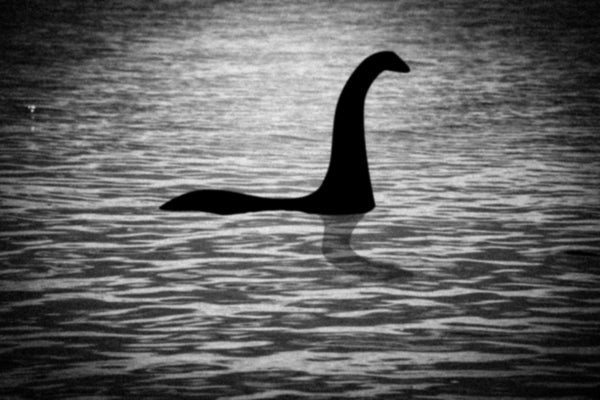
The single-celled organism Lacrymaria olor uses one of the most curious hunting techniques of all. Its oval-shaped body measures around 40 micrometers and has a small protrusion at the end. When it detects food, it stretches this “neck” out to around 30 times its own body length within seconds in order to grab prey that is far away, an action that makes it look like the Loch Ness monster. But how L. olor manages to do this without enormous tensile forces tearing its cell membrane has so far been a complete mystery. Experts suspect that the organism must store the extra length of this feeding apparatus somewhere to be able to retrieve it so quickly.
Now Eliott Flaum and Manu Prakash of Stanford University seem to have solved the mystery. As they report in the journal Science, the cell membrane and internal structure of the single-celled organism are folded like origami and can be easily pulled apart and folded together again. This means that the forces on the membrane and the energy costs are very low, write the two researchers. L. olor stretches its neck around 20,000 times over the course of its life without incident.

The long neck of Lacrymaria olor—the Loch Ness microbe—holds several biomechanical secrets.
Picturepest/Flickr (CC BY 2.0)
On supporting science journalism
If you're enjoying this article, consider supporting our award-winning journalism by subscribing. By purchasing a subscription you are helping to ensure the future of impactful stories about the discoveries and ideas shaping our world today.
The tiny single-celled organism’s unusual hunting technique brings with it a whole series of potential problems. Normally it takes a lot of energy to deform a cell membrane so drastically—and at the speed with which L. olor stretches its neck, the organism would not be able to produce enough new membrane material. And while the neck has to be extremely flexible to allow for the rapid movement, it also has to be stiff and stable at the same time so that it doesn’t simply snap over at the first opportunity. L. olor solves all of these problems by folding the membrane of its neck into several layers.
The membrane’s fold lines have a complicated curved geometry that enable it to unfold into a cylinder. Beneath the folded membrane lies a network of spirally wound tubes that are folded together with the membrane and in turn help in the orderly folding and unfolding. The principle is similar to so-called Yoshimura origami, in which a cylinder consists of a grid of folded rhombuses and can be stretched out and folded up. One question still remains unanswered, however: When micrometer-sized objects move toward each other in the water, a repulsive force is created, so the protruding neck should cause the prey to drift away. Why that doesn’t happen is unclear—not all of the mysteries surrounding L. olor have been solved yet.
This article originally appeared in Spektrum der Wissenschaft and was reproduced with permission.