NONFICTION
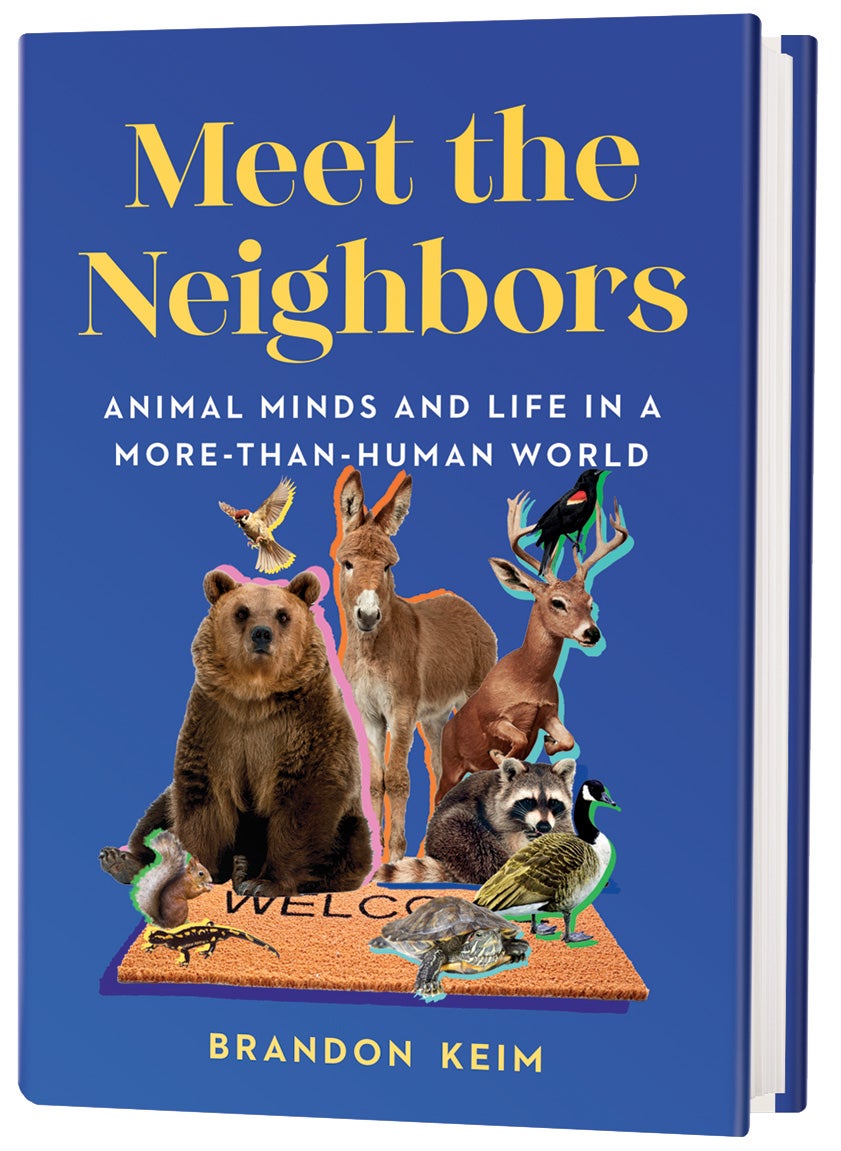
Meet the Neighbors: Animal Minds and Life in a More-Than-Human World
by Brandon Keim.
W. W. Norton, 2024 ($29.99)
Anyone who follows stories of animal intelligence will have heard of exceptional animals. Snowball the cockatoo dances rhythmically to pop songs. Alex the parrot knew more than 100 words. Koko the gorilla might have had the language ability of a young child. But do animals need to be geniuses to be worthy of our attention?
On supporting science journalism
If you're enjoying this article, consider supporting our award-winning journalism by subscribing. By purchasing a subscription you are helping to ensure the future of impactful stories about the discoveries and ideas shaping our world today.
Journalist Brandon Keim’s Meet the Neighbors is about ordinary animals—the bumblebees, coyotes, sparrows, raccoons and squirrels that live among us—and what it would take for people to be more considerate of the wild creatures who share our cities and backyards. Keim asks, “How might an awareness of animal minds shape the ways we understand them and, ultimately, how we live with them on this shared, precious planet?”
I was hooked from the opening pages, which detail a woman’s relationship with a bumblebee that she saves and nurses back to health. Keim’s enthusiasm for animals and the people who care about them is infectious. He interviews people who, for instance, spend hours cataloging the movements of local coyotes to prove they aren’t dangerous or overrunning the city and talks to scientists in Seattle who banded sparrows to watch how they socialized over the course of a year. In this thoughtful book, people’s experiences with animals and scientific studies about animal behavior become a springboard for asking bigger questions about how to treat animals more fairly.
In later chapters, Keim looks at various efforts to give animals legal standing so that their needs are represented alongside ours. What if we thought of the seasonal cycles of roosting swifts before taking down a chimney they’ve inhabited in the past? What if we considered animals as stakeholders that should be heard before harvesting timber from a forest, using pesticides in agriculture, or removing “nuisance” animals that aren’t causing damage or harm?
It’s now well documented that the so-called anthropause—the lack of human noise and activity that occurred during the COVID lockdown—made people more interested in the natural world around them. Meet the Neighbors asks how we’ll use our newfound love to better coexist with nature—to be, in other words, better neighbors.