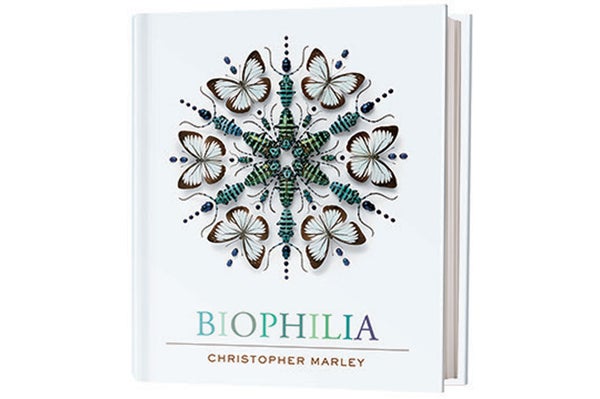
Book Review: Biophilia
Books and recommendations from Scientific American
By Clara Moskowitz
On supporting science journalism
If you're enjoying this article, consider supporting our award-winning journalism by subscribing. By purchasing a subscription you are helping to ensure the future of impactful stories about the discoveries and ideas shaping our world today.
Biophilia
by Christopher Marley
Abrams, 2015 (($50))
All manner of living things, including pythons, octopuses, orchids and crystals, are turned into art in the photographs of Biophilia (meaning “love of life”) by artist and designer Marley. Geometric patterns, larger-than-life close-ups and mosaics of various creatures showcase the stunning colors, shapes and textures of the natural world. “We do not love nature because it is beautiful,” Marley writes in an introductory essay to the large-format book. “We find beauty in nature because we are a part of it, and it is a part of us.”
Subscribe to Support Independent Journalism
Great science journalism requires human expertise, time, effort and creativity. And it costs money. That’s why I and the journalists here at Scientific American hope you’ll join our community.
When you subscribe, you are supporting staff and freelance journalists who are passionate about telling science stories that are true, important and compelling. Our editors and reporters are often experts in their fields, which means they understand the nuances of big discoveries and can untangle the breakthroughs from the hype. With a subscription, you are also supporting rigorous fact-checking to ensure the words we publish are precise and accurate. And you’re supporting original illustrations, graphics and photos that bring you closer to an advanced laboratory, an ice sheet in Antarctica or a space mission in orbit. You’re helping us craft other types of high-quality journalism as well: Our newsletters are carefully written, edited and curated by staffers you have or will come to know and love. Our Science Quickly podcast is based on original reporting, collaboration with editors and scientists and exacting production.
Subscriptions keep this engine running so we can continue to deliver thoughtful, rigorous and independent science journalism to you. In an era of viral misinformation, this work is crucial. If you value what we do, I hope you’ll consider joining us as a subscriber