On supporting science journalism
If you're enjoying this article, consider supporting our award-winning journalism by subscribing. By purchasing a subscription you are helping to ensure the future of impactful stories about the discoveries and ideas shaping our world today.
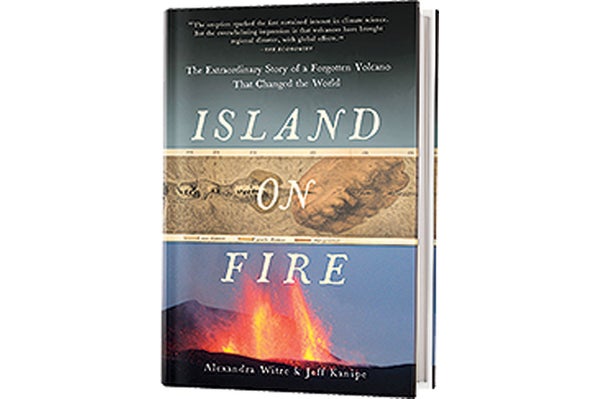
Island on Fire: The Extraordinary Story of a Forgotten Volcano That Changed the World
by Alexandra Witze and Jeff Kanipe
Pegasus Books, 2015 (($26.95))
In 1783 the Icelandic volcano Laki erupted, with catastrophic consequences. The ash it pumped into the atmosphere blanketed most of the Northern Hemisphere in a sun-blocking fog, causing one of the most severe winters for hundreds of years. Many across Europe froze to death, and crops withered, leading to mass famine. In Africa, the monsoons failed to come, and the Nile did not flood as usual, causing one sixth of Egypt's population to starve or leave the country. The official death tally in Iceland from Laki was around 9,000, but some experts suggest the global toll was much higher. Journalists Witze and Kanipe tell the scientific and human story of Laki and predict that because a Laki-scale eruption happens on average every 200 to 500 years in Iceland, a similar event is not unlikely.
Subscribe to Support Independent Journalism
Great science journalism requires human expertise, time, effort and creativity. And it costs money. That’s why I and the journalists here at Scientific American hope you’ll join our community.
When you subscribe, you are supporting staff and freelance journalists who are passionate about telling science stories that are true, important and compelling. Our editors and reporters are often experts in their fields, which means they understand the nuances of big discoveries and can untangle the breakthroughs from the hype. With a subscription, you are also supporting rigorous fact-checking to ensure the words we publish are precise and accurate. And you’re supporting original illustrations, graphics and photos that bring you closer to an advanced laboratory, an ice sheet in Antarctica or a space mission in orbit. You’re helping us craft other types of high-quality journalism as well: Our newsletters are carefully written, edited and curated by staffers you have or will come to know and love. Our Science Quickly podcast is based on original reporting, collaboration with editors and scientists and exacting production.
Subscriptions keep this engine running so we can continue to deliver thoughtful, rigorous and independent science journalism to you. In an era of viral misinformation, this work is crucial. If you value what we do, I hope you’ll consider joining us as a subscriber