Book Review: Rust: The Longest War
Books and recommendations from Scientific American
On supporting science journalism
If you're enjoying this article, consider supporting our award-winning journalism by subscribing. By purchasing a subscription you are helping to ensure the future of impactful stories about the discoveries and ideas shaping our world today.
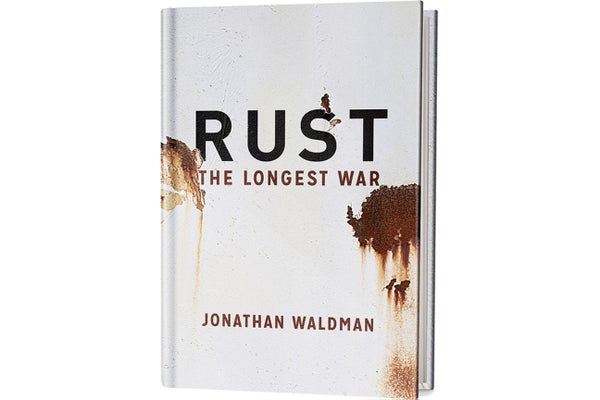
Rust: The Longest War
by Jonathan Waldman
Simon & Schuster, 2015 ($26.95)
Of all the environmental challenges threatening worldwide infrastructure, rust, journalist Waldman admits, is not “sexy.” It creeps in gradually and seems like more of an aesthetic blight than a dire danger to the modern machinery our society depends on. Yet rust is costlier than all other natural disasters combined, Waldman explains, and the science of corrosion, along with the ingenious engineering strategies humans have devised to fight it, is fascinating. Rust “seizes up weapons, manhandles mufflers, destroys highway guardrails, and spreads like a cancer in concrete,” he writes. Waldman attends “Can School,” interviews rust experts and visits the Alaska pipeline, among other adventures, to illuminate the myriad attacks rust makes on our daily lives. In doing so, he adds luster to a substance considered synonymous with dullness.
It’s Time to Stand Up for Science
If you enjoyed this article, I’d like to ask for your support. Scientific American has served as an advocate for science and industry for 180 years, and right now may be the most critical moment in that two-century history.
I’ve been a Scientific American subscriber since I was 12 years old, and it helped shape the way I look at the world. SciAm always educates and delights me, and inspires a sense of awe for our vast, beautiful universe. I hope it does that for you, too.
If you subscribe to Scientific American, you help ensure that our coverage is centered on meaningful research and discovery; that we have the resources to report on the decisions that threaten labs across the U.S.; and that we support both budding and working scientists at a time when the value of science itself too often goes unrecognized.
In return, you get essential news, captivating podcasts, brilliant infographics, can't-miss newsletters, must-watch videos, challenging games, and the science world's best writing and reporting. You can even gift someone a subscription.
There has never been a more important time for us to stand up and show why science matters. I hope you’ll support us in that mission.