
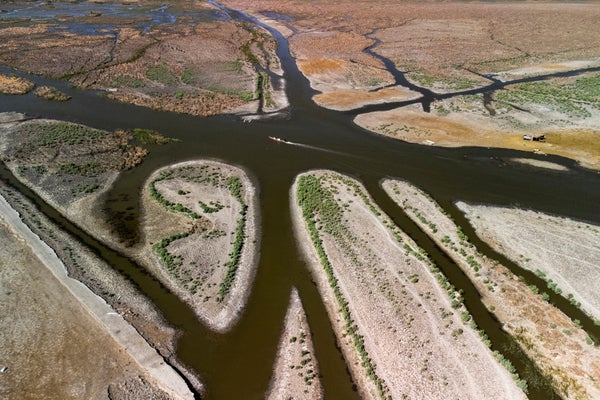
CLIMATEWIRE | The Middle East's Fertile Crescent is experiencing one of the most severe droughts in its history — and climate change has made it worse.
Rising temperatures, driven by human greenhouse gas emissions, are the primary driver of the ongoing drought in parts of Syria, Iraq and Iran, according to a new analysis from the science consortium World Weather Attribution, which investigates the links between extreme weather events and climate change.
Researchers found that the heat made the drought 25 times more likely to occur in Syria and Iraq than it would have been in a world without global warming and about 16 times more likely in Iran.
On supporting science journalism
If you're enjoying this article, consider supporting our award-winning journalism by subscribing. By purchasing a subscription you are helping to ensure the future of impactful stories about the discoveries and ideas shaping our world today.
The current drought is classified as “extreme,” according to the metrics used by the U.S. Drought Monitor. But in a cooler world, with no human-caused climate change, it would not have crossed the drought threshold at all, the analysis concludes.
The region — the birthplace of irrigation and farming thousands of years ago — is now bracing for historic water shortages and agricultural failures. And such events will only worsen as temperatures continue to rise.
The consortium's analysis finds that severe droughts can be expected about once a decade in Syria and Iraq and twice a decade in Iran in the current climate, in which global temperatures have already risen by more than 1 degree Celsius over the last 150 years. If global warming reaches 2 degrees, the frequency will likely double.
The study relies on a combination of historical climate data and climate models, which simulate the world both with and without the influence of climate change. Such simulations can tell scientists the extent to which global warming has influenced any given extreme weather event.
The analysis looked back at the last three years of drought, examining affected areas in Iran and in the Tigris and Euphrates river system, including Iraq and Syria. Researchers investigated both rainfall and temperature patterns to determine whether climate change had played a role.
While they didn’t find a clear signal of global warming in the region’s precipitation patterns, they did find a strong influence on the region’s rising temperatures. High heat can cause more water to evaporate from the landscape, making droughts more likely and more intense.
The multiyear drought has affected some of the most vulnerable populations in the world.
After more than a decade of conflict in Syria, more than 12 million people — half the country’s population — are currently facing hunger, while nearly 3 million more are at risk of food insecurity, according to estimates from the U.N.’s World Food Programme. Drought has driven up the price of food, water and energy, and cholera outbreaks have made the need for clean, reliable water supplies even more urgent.
After decades of conflict, the U.N. estimates that more than 1 million Iraqi people are still internally displaced today, with as many as 3 million people in need of humanitarian assistance. Environmental crises have compounded the problem in recent years.
The International Organization for Migration estimates that more than 55,000 people in central and southern Iraq were displaced by climate change and environmental degradation between 2016 and 2022 alone.
Reprinted from E&E News with permission from POLITICO, LLC. Copyright 2023. E&E News provides essential news for energy and environment professionals.