
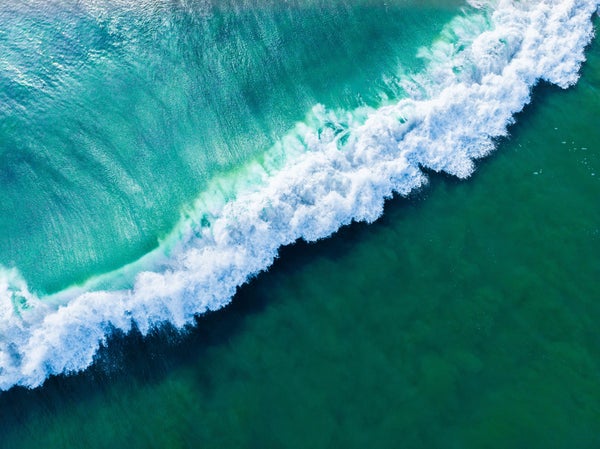
CLIMATEWIRE | Climate change is reshaping the surface of the Earth — even down to the color of the oceans.
A new study says that more than half the world’s ocean area is “becoming greener,” and the trend is connected to human-caused global warming.
It’s not clear what is driving the greening. In some places, it could indicate changes in the amount of plankton or other organic material floating in the water. Plankton are a cornerstone of the ocean food chain, and these kinds of shifts could have ripple effects throughout the entire marine ecosystem.
On supporting science journalism
If you're enjoying this article, consider supporting our award-winning journalism by subscribing. By purchasing a subscription you are helping to ensure the future of impactful stories about the discoveries and ideas shaping our world today.
That’s a topic for future research. For now, the researchers can say for sure that the oceans are changing colors, and climate change is to blame.
The study, published Wednesday in the journal Nature, examines 20 years of satellite data measuring light reflected at the surface of the water all across the globe, subtle changes that aren’t necessarily visible to the naked eye. The research finds that 56 percent of the world’s oceans are shifting in color — and on the whole, they’re growing greener. The trend is especially strong in the lower latitudes, including the subtropics and tropics.
The researchers then used a computer model to find out whether climate change was playing a part. They conducted one set of simulations representing the oceans under a strong climate change scenario, then compared them with a second set of simulations imagining a world in which climate change didn’t exist.
The model suggests that rising global temperatures are to blame.
The exact reasons still require some scientific digging. While climate change seems to be the culprit, the study also indicates that rising ocean temperatures in and of themselves aren’t driving the greening.
There are plenty of other ways global warming is affecting the world’s oceans, by changing the structure and flow of certain currents, for instance. These kinds of changes can affect the growth of phytoplankton and other factors that might be contributing to the greening.
The findings weren’t a surprise to the researchers. They’re consistent with the way researchers expect the global oceans to change as the world keeps on warming.
“I’ve been running simulations that have been telling me for years that these changes in ocean color are going to happen,” study co-author Stephanie Dutkiewicz, a senior research scientist at the Massachusetts Institute of Technology, said in a statement. “To actually see it happening for real is not surprising, but frightening.”
Reprinted from E&E News with permission from POLITICO, LLC. Copyright 2023. E&E News provides essential news for energy and environment professionals.