
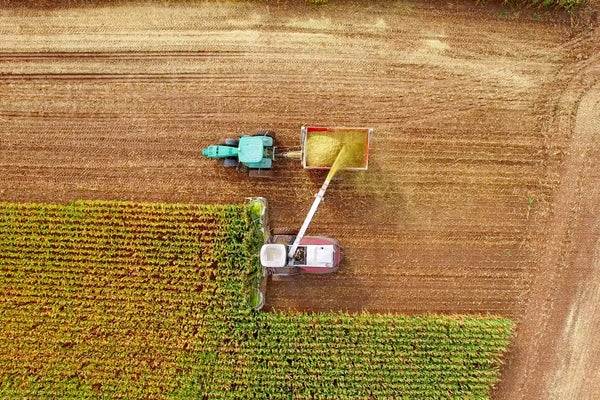
U.S. corn production is booming as Midwestern farmers adopt new technologies and methods that mitigate bad weather, destructive pests and weeds.
But the long-term outlook isn't rosy.
New research published yesterday in Nature Food shows maize is becoming more vulnerable to drought, a finding with major implications for annual corn yields given scientists' predictions that climate change will intensify poor weather conditions.
On supporting science journalism
If you're enjoying this article, consider supporting our award-winning journalism by subscribing. By purchasing a subscription you are helping to ensure the future of impactful stories about the discoveries and ideas shaping our world today.
"What is clear," the researchers found, "is that despite robust corn yields, the cost of drought and global demand for corn are rising simultaneously."
The researchers used county-level soil maps and satellite-based yield estimates to assess crop success in the nine Midwestern states known as the Corn Belt. After looking at different fields' drought conditions each year between 1999 and 2019, the authors identified a "very clear" increase in crops' sensitivity to soil conditions that lead to drought, said report co-author David Lobell, a Stanford University professor of Earth system science.
In an interview, Lobell said the good news is that technologies like weed- and insect-resistant crops are boosting farmers' overall productivity. The bad news, he added, is that those advancements do not appear to be improving the crop's resilience to worsening weather conditions, rendering yields more sensitive to drought.
Why? One potential cause is farmers' increasing ability to boost their crops with technologies that aren't drought-related but do address other challenges. "If those things other than drought, like pests or weeds, are becoming less of a constraint," Lobell said, it makes sense that weather conditions would play an outsize role in determining crop success from year to year.
Another plausible explanation, the report said, is that new technologies often spur changes in how farms are managed. Increased access to drought-resistant seeds, for instance, has enabled farmers to begin planting their crops more densely because hardier seeds are more able to cope with potential water shortfalls.
So while it's positive that drought technologies are improving, Lobell said, they simultaneously trigger "management changes that translate these gains for drought conditions into gains for all conditions. And then on top of that you have these changes in the things that have very little to do with drought that are going to be more helpful when the conditions are good than when the conditions are bad."
What results, the researcher said, is a tension between farmers' need to increase overall agricultural productivity and adapt to rising global temperatures.
"It seems like [climate change is] going to do as much damage as we thought, or maybe even more," he said in an interview. "Because it's taking away the good conditions that farmers are [becoming] really good at."
Reprinted from Climatewire with permission from E&E News. E&E provides daily coverage of essential energy and environmental news at www.eenews.net.