
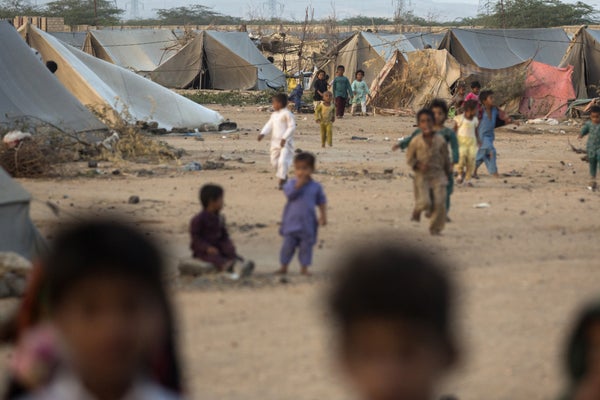
CLIMATEWIRE | Extreme weather events and climate disasters displaced more than 43 million children around the globe between 2016 and 2021, according to a new report from UNICEF. And the United Nations says tens of millions more children will suffer a similar fate as climate change worsens extreme weather worldwide.
Nearly 41 million displacements were driven by storms and floods alone, the report finds. Droughts and wildfires played a smaller, but still significant, role as well.
The Philippines, India and China saw the greatest total number of child displacements, with more than 23 million between them during the study period. That’s partly because India and China have the highest total populations in the world.
On supporting science journalism
If you're enjoying this article, consider supporting our award-winning journalism by subscribing. By purchasing a subscription you are helping to ensure the future of impactful stories about the discoveries and ideas shaping our world today.
But other countries experienced greater losses relative to the size of their child populations, particularly small island developing nations and countries located in the Horn of Africa, the continent’s easternmost peninsula.
The number of displaced children on the island of Dominica from 2016 to 2021, for instance, was equivalent to 76 percent of the nation’s child population. These displacements were driven almost entirely by storms.
Released Thursday evening, the new report is among the first to estimate recent weather-related child displacements on a global basis. Children are often “statistically invisible” in existing databases, the report states, where displacement figures are rarely broken down by age.
The report doesn’t statistically distinguish between displacements caused by preemptive evacuations and those that were forced in the aftermath of extreme weather events. But it’s an important distinction for future studies to investigate. Properly managed evacuations can save lives and reduce the harm that families suffer when they’re suddenly displaced.
Yet many of the nations highlighted in the new report have limited resources for managed evacuations.
South Sudan and Somalia saw 12 percent and 11 percent, respectively, of their child populations displaced by floods and drought during the study period. Yet these nations implement relatively few evacuations compared to wealthier countries, the report states, adding that “children living in these countries may be even more vulnerable to displacement risk.”
The report also employs a special model to predict future rates of child displacement. It suggests that tens of millions more children likely will be forced from their homes by climate disasters in the coming years.
River floods will be a top driver, the model suggests, likely accounting for as many as 96 million displaced children over the next 30 years. A warmer atmosphere holds more moisture, and climate change is causing heavy precipitation events to intensify around the world, increasing the risks of catastrophic floods.
Cyclone winds could cause another 10.3 million child displacements over the next three decades, and storm surge could displace an additional 7.2 million.
The report highlights the need for greater investment in climate adaptation measures around the world, particularly in low-income nations, which house the world’s most vulnerable populations.
“As the impacts of climate change escalate, so too will climate-driven movement,” said Catherine Russell, UNICEF’s executive director, in a statement. “We have the tools and knowledge to respond to this escalating challenge for children, but we are acting far too slowly. We need to strengthen efforts to prepare communities, protect children at risk of displacement, and support those already uprooted.”
Reprinted from E&E News with permission from POLITICO, LLC. Copyright 2023. E&E News provides essential news for energy and environment professionals.