
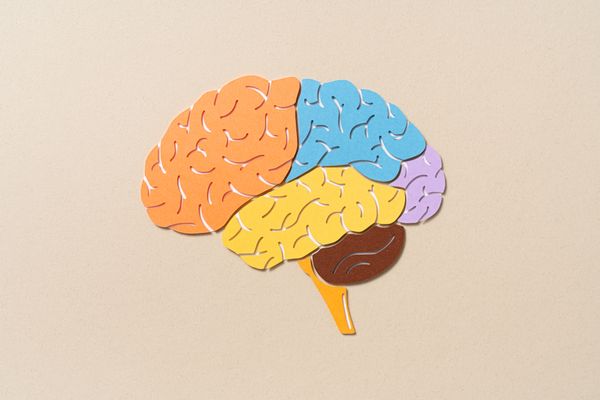
Right now, your brain is recognizing the shapes of these letters, analysing their meaning, and holding a stream of thought together—all on about 20 watts of power. That’s roughly what it takes to run a lightbulb.
Yet reproducing even a small fraction of the brain’s capabilities using today’s AI systems can require vast computing infrastructure and energy.
Neuromorphic computing—also known as “brain-inspired computing" is an attempt to close that gap. Not by making today’s computers slightly more efficient, but by fundamentally rethinking how they should work.
On supporting science journalism
If you're enjoying this article, consider supporting our award-winning journalism by subscribing. By purchasing a subscription you are helping to ensure the future of impactful stories about the discoveries and ideas shaping our world today.
The human brain holds roughly 86 billion neurons, wired to each other through junctions called synapses. A neuron receives signals from its neighbors; when their combined effect crosses a threshold, it will fire a brief electrical pulse known as a spike.
Two things make this process efficient. First, energy is spent only where it’s needed, not everywhere constantly. Second, memory and processing are intertwined in the strength of each synapse’s response. The brain doesn’t have to pause and go find information, saving both time and energy.
In contrast, in an ordinary computer chip, the processor and memory are physically separate, so every calculation entails transferring data between them. This can account for a substantial share of energy use—known as the Von Neumann bottleneck, a term first used by US computer scientist John Backus in 1978 to describe this computing inefficiency.
Neuromorphic computing tackles this inefficiency in several ways: bringing memory and processing closer together, using “sparse representations” (data models where most values are zero), and performing computation only when events occur.
This is known as event-driven computing—and we are already seeing some exciting applications.
Sensors modeled on human retina
Event cameras are sensors modeled on the human retina. Their pixels respond individually and only when they detect a change in the scene—rather than capturing a full frame dozens of times a second, like a smartphone or video camera.
The result is a neuromorphic sensor that uses a fraction of the power, handles fast motion without blur, and works equally well in bright sunlight and near-total darkness.
In autonomous vehicles, this combination of low latency and reliable performance in glare or darkness could be the difference between detecting a pedestrian in time, or not. And in space, where power is scarce and lighting extremes are common, event cameras have already been deployed for object and debris tracking.
It might be tempting to ask if neuromorphic hardware could do for computing what Nvidia’s graphics processing units (GPUs) have done for AI. But these are fundamentally different kinds of chip.
Nvidia’s GPUs are exceptionally good at the dense, repetitive maths behind deep learning, which has made them the default choice for almost any AI task. In contrast, neuromorphic computing’s event-driven approach looks likely to spawn a wide range of specialized chips, rather than a single winner-takes-all design that everyone adopts at once.
Australia’s BrainChip already sells a commercial neuromorphic processor for powering cameras and sensors that need to run at very low power. Expect neuromorphic hardware to sit alongside conventional processors and GPUs rather than replacing them, taking on the jobs where its efficiency edge is decisive.
Sensitive information
But there is another advantage to neuromorphic computer technology beyond energy saving.
Because neuromorphic chips can process data right where it’s generated, sensitive information from wearables, smart cameras, and medical sensors can stay on the device instead of traveling to the cloud, potentially reducing privacy and cybersecurity risks associated with data transmission.
Devices can also work offline, without needing to send data to a distant server and wait for a reply. Cutting out that round trip matters wherever split-second decisions are required, such as in autonomous vehicles, drones, and robots operating beyond reliable signal.
This won’t make data centers redundant. But fewer tasks may need one in future, and those that remain could become dramatically more efficient. IBM has already demonstrated energy savings of up to 10,000-fold on event-driven tasks, compared with conventional digital architectures, with its TrueNorth chip.
Rethinking how computing works
Computing has been through a transition like this before. The first computers filled entire rooms and drew as much power as a small factory. Today, however, a chip smaller than a fingernail in the phone in your pocket is far more capable.
Neuromorphic computing raises the possibility of a similar shift—driven less by cramming in more transistors (the tiny switches that make up a chip’s circuitry) than by rethinking how computing should work in the first place.
But turning this promise into everyday infrastructure will take sustained effort. At NeuroWare, the UK’s leading multi-university innovation hub for neuromorphic computing, I have led the development of a UK roadmap for this technology up to 2050, working with colleagues across academia, industry and government.
With the global market for neuromorphic technology forecast to nearly quadruple to $20 billion (£14.8 billion) by 2030, the UK needs open-access facilities to prototype new chips, coordinated investment, common standards – and a workforce trained to bridge neuroscience, electronics and computer science.
The foundations are already here. What’s missing is the infrastructure to take neuromorphic computing from supercomputers such as the University of Manchester’s brain simulator, SpiNNaker, to the billions of ordinary devices that could one day use brain-inspired hardware for themselves.
Your brain solved this problem millions of years ago. It’s taken science a long time to appreciate just how well it works.
This article was first published by The Conversation. Read the original article here.