
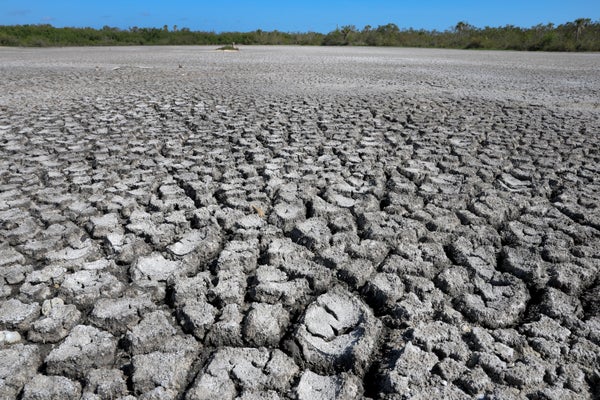
When we think of drought, we tend to think of consequences we can see—wildfires, hose bans, taps that run dry and crops that fail. But it turns out drought can have a damaging effect even on the microscopic level by promoting dangerous antibiotic resistance in bacteria.
The finding is detailed in a study published Monday in Nature Microbiology. Researchers discovered that drought conditions can boost both soil-dwelling and human-hosted bacteria’s ability to resist antibiotics. And as rising global temperatures dry out more of the world, more people may be exposed to these treatment-immune pathogens.
“We found this really surprisingly strong correlation of the aridity index and antibiotic resistance,” says Dianne Newman, senior author of the study and a microbiologist at the California Institute of Technology, who adds that the data are a “wake-up call” for people to pay attention to antibiotic resistance.
On supporting science journalism
If you're enjoying this article, consider supporting our award-winning journalism by subscribing. By purchasing a subscription you are helping to ensure the future of impactful stories about the discoveries and ideas shaping our world today.
“I think [the study authors] are exploring something novel,” says Jason Burnham, an infectious diseases physician and clinical researcher who was not involved in the new research. Antibiotic resistance isn’t a new problem: first noticed soon after the discovery of antibiotics, the ability of some bacteria to evade treatment with these drugs has challenged physicians for decades and contributes to an estimated five million deaths worldwide each year. But connecting it to climate change is an emerging area of interest—and there are many unanswered questions about how a warmer world will influence disease.
Newman and her colleagues were interested in the ecological niche of phenazines, which are naturally occurring antibiotics that live in soil. When they tested the microbial population in wet and dry soil samples, they noticed that drier conditions tended to increase the concentration of antibiotics—and resistant bacteria.
“It stands to reason that if you have bacteria in the soil making antibiotics, and you start drying out the soil, those antibiotics become more concentrated,” Newman says. “The only bacteria that can withstand that are those that can resist it.”
The researchers also looked at soil data from several different ecosystems that had experienced drought and found elevated levels of antibiotic-resistant bacteria. Then they analyzed hospital data that revealed that the aridity of a hospital's location was strongly correlated with the number of antibiotic-resistant infections.
As the planet warms, more of the world—perhaps as much as 25 percent of Earth by 2050—will experience droughts and desertlike conditions. That could translate to much higher rates of antibiotic-resistant bacterial diseases—but it could also help doctors in dry areas better prepare to fight these illnesses.
“What [the authors] are proposing, reading between the lines a little bit, is that hospitals in drier areas may need to use different antibiotics than hospitals with sort of less arid conditions,” Burnham says.