
CLIMATEWIRE | Disasters forced more than 26 million people in 148 countries to leave their homes in 2023, underscoring the growing dangers of more frequent floods, storms, wildfires and droughts.
Last year saw among the highest number of weather-related displacements in the last decade, though fewer than in 2022, according to an annual report by the International Displacement Monitoring Centre. The report, released Tuesday, also found that conflict and violence triggered another 20.5 million displacements in 2023.
Altogether, 75.9 million people were living in "internal displacement" in dozens of countries last year, including tens of millions of people displaced in previous years and still unable to return to their homes.
On supporting science journalism
If you're enjoying this article, consider supporting our award-winning journalism by subscribing. By purchasing a subscription you are helping to ensure the future of impactful stories about the discoveries and ideas shaping our world today.
The report warns that disasters frequently overlap with conflict and violence, dramatically worsening outcomes for affected people. Forty-five countries and territories reported conflict-related displacements in 2023, and all but three of them also reported displacements from disasters as well.
“[W]hile the numbers fluctuate year-on-year, disaster-related displacements remain high, in nearly every corner of the world and often intertwined with conflict dynamics in fragile settings," wrote Robert Piper, special adviser on solutions to internal displacement to the United Nations secretary general, in the report's forward.
For example, hundreds of thousands of people were displaced by floods last fall in Somalia, a country already wracked by severe drought and long-term civil war.
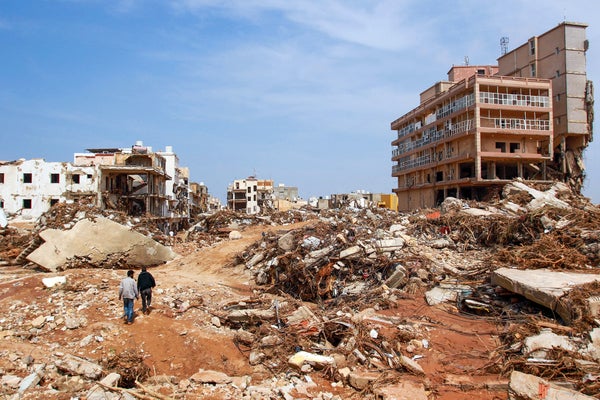
Libya also suffered catastrophic floods in September, when a cyclonelike weather system known as Storm Daniel overwhelmed two dams in the city of Derna, killing thousands. Experts noted at the time that the country's long history of violent conflict likely contributed to limited investment in maintaining the dams.
Storms and floods accounted for the highest number of disaster-related displacements worldwide last year — and they consistently do so year after year. Combined, they accounted for 19.3 million displacements in 2023.
Wildfire and droughts are also a growing driver of displacements, according to the report. Global data for these events is harder to come by, making comprehensive estimates more difficult. But two-thirds of all wildfire-related displacements in 2023 occurred in Canada and Greece, both of which saw their worst wildfire seasons on record last year.
The report notes that not all disasters are climate-related. Earthquakes were also a major driver of internal displacements last year, especially in Turkey, Syria, Afghanistan, Morocco and the Philippines.
Developing nations typically see more disaster-related displacements than their wealthier counterparts. That’s true of climate impacts in general, which disproportionately affect lower income parts of the world.
But some high-income countries — including Canada and New Zealand — reported their highest disaster-related displacement figures on record last year. In New Zealand, Cyclone Gabrielle displaced 11,000 people — more than in all the storms in the previous five years combined.
Meanwhile, escalating conflict worldwide continues to drive millions of people from their homes, with some parts of the world disproportionately affected by violence. Sudan, Palestine and the Democratic Republic of the Congo accounted for two-thirds of all the conflict-related displacements in 2023.
The report notes that before 2023, displacements in the Middle East and North Africa had been on the decline for three years. But displacements in Palestinian territories has reversed that trend, contributing to an eightfold increase in conflict-related displacements in the region amid the Israel-Hamas war.
Reprinted from E&E News with permission from POLITICO, LLC. Copyright 2024. E&E News provides essential news for energy and environment professionals.