
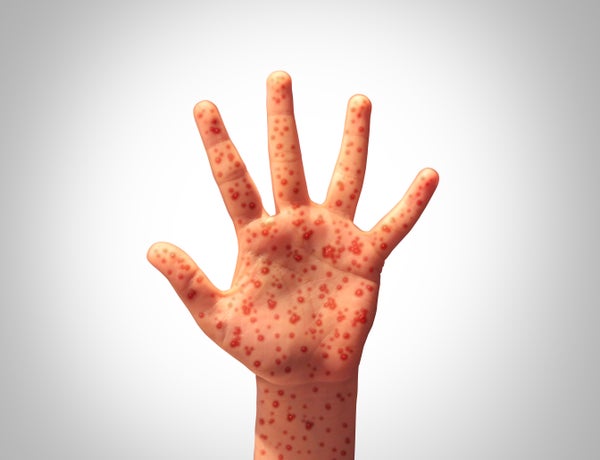
Measles keeps infecting more people across the U.S., with 935 cases reported as of this weekend, in an outbreak that began in Texas and has spread to dozens of other states. Among the 285 small children infected, 23 percent have had to be hospitalized. And 96 percent of all cases have occurred in people who have not been vaccinated or whose status is unknown. When used, the measles vaccine prevents infection nearly all the time. Yet Secretary of Health and Human Services Robert F. Kennedy, Jr., has cast unfounded doubt on vaccine safety and used a visit to Texas last week to promote three alternative treatments: antibiotics, inhaled steroids and vitamin A.
Why It Matters
“There is no effective treatment for measles,” says Aniruddha Hazra, an infectious disease physician at University of Chicago Medicine. Measles vaccines prevent infection in 97 percent of cases. But the treatments Kennedy supports generally do not help kids or adults get rid of the virus itself. Sometimes they are used to help patients tolerate complications that can occur with a severe measles infection. But Kennedy’s statements that they are effective measles treatments “are claims with no data and, at best, half-truths,” Hazra says.
On supporting science journalism
If you're enjoying this article, consider supporting our award-winning journalism by subscribing. By purchasing a subscription you are helping to ensure the future of impactful stories about the discoveries and ideas shaping our world today.
What about Vitamin A?
Among severely malnourished children in developing countries, vitamin A supports the immune system. This may help them fight off a measles infection. The World Health Organization does say that two doses of vitamin A supplements over two days can help prevent eye damage in people with measles who are vitamin-deficient. But most children in the U.S. do not have this severe nutrition deficiency, Hazra says, so extra vitamin A does not provide an extra layer of protection. And large supplemental amounts can be toxic when given during an extended period; they can lead to liver damage, harmful fluid pressure against the brain and other problems.
What’s Wrong with Inhaled Steroids?
Kennedy highlighted the inhaled steroid drug budesonide, which is often used to reduce swelling in the airways of people with asthma. “These drugs work by suppressing the immune system,” Hazra says. “Frankly, in measles, they can be dangerous because they can exacerbate the viral infection,” since they suppress immune cells that the body uses to fight off viruses.
Why Not Use Antibiotics?
The antibiotic clarithromycin is sometimes used to treat bacterial pneumonia. That infection can co-occur with severe measles, and in such cases, doctors will use clarithromycin against the bacteria. But antibiotics only work on bacteria, not viruses, so they will not combat the measles infection itself. And a lot of hospitalized measles patients never develop this kind of pneumonia.
What’s Next?
Last week Kennedy announced that he would direct the U.S. Centers for Disease Control and Prevention to search for new measles treatments. He made the point that the government should do more to help people who don’t want vaccinations. “I think it’s a great idea to develop new therapies. We don’t have many good antiviral treatments,” Hazra says. “But it will be really hard for the CDC to do this because of all the big staff and budget cuts that Kennedy has enacted at the agency.” In addition, he says, such development for measles seems to be a waste of money and resources because medicine already has an approach that is 97 percent effective: the measles vaccines.