
As a kid, Jorg Massen would watch birds swoop and swirl overhead and wonder whether they were doing it for enjoyment. Massen is now a behavioral biologist at Utrecht University in the Netherlands, and thanks to a special setup at a nearby bird park, he was finally able to put that question to the test.
For several months each year the birds at Avifauna Bird Park are free to leave their aviaries at certain times every day. When the gates open, each bird decides for itself: fly out into the open sky or stay home. They get no penalty or reward either way.
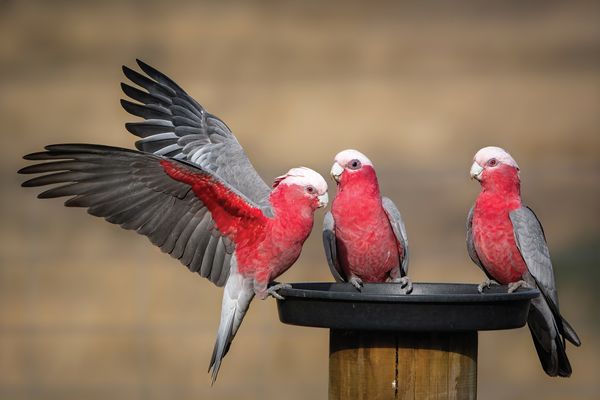
Among these birds at the time of Massen’s study were 17 pink-and-gray Galah Cockatoos that, in the wild, fly long distances to find seeds. The Galahs chose to fly for almost every 20-minute period offered, Massen and his colleagues reported in a paper published in Behaviour.
On supporting science journalism
If you're enjoying this article, consider supporting our award-winning journalism by subscribing. By purchasing a subscription you are helping to ensure the future of impactful stories about the discoveries and ideas shaping our world today.
Their consistent choice to fly is “in line with the notion that the birds found flight rewarding,” says Michael Mendl, an animal behavior researcher at the University of Bristol in England, who was not involved in the study. The only exception was a pair of birds that skipped flying once, on a day when they had just been given new nest boxes, Massen says: “they had other activities to attend to”—such as courtship and mating—“which are also considered joyful.”
After flight sessions, the Galahs foraged, scratched and raised their crests more—behaviors the researchers interpreted as signs of “positive excitement resulting from free flight.” And in a test designed to measure optimism, the Galahs grew more hopeful of finding their favorite treat (a walnut) when they’d had several days of free flight and more pessimistic about their walnut prospects after several days of being grounded.
The birds’ hormones did not change after flight as predicted, however; an expected dip in the stress hormone cortisol might have been masked by a rise caused by physical exertion, Massen says.
We can’t be certain about whether wanting to fly and liking the experience add up to feeling happy, Mendl notes. Animal-cognition scientists have typically been extremely hesitant to ascribe feelings or desires based on animals’ behavior, but researchers have become increasingly open to attributing such conscious experiences to animals when the data support it. If birds are capable of conscious experience, Mendl says, “the findings would indeed suggest that the birds enjoyed flying.”
For Galahs, Massen says, flight appears to be “an ethological need”: a behavior they’re naturally driven to perform. Massen sees his study as part of a broader shift in animal-welfare science away from simply preventing suffering and toward designing environments that let animals express the natural behaviors that seem to make them feel good.