
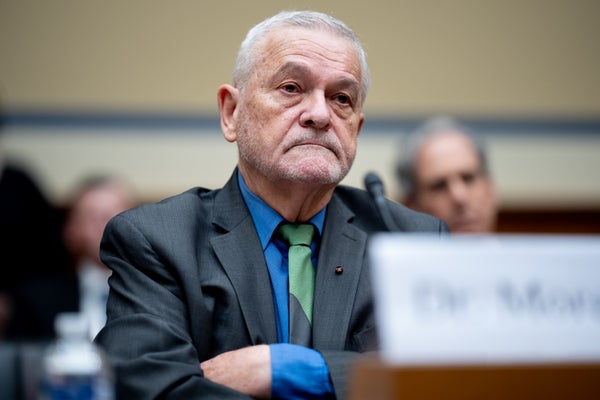
The Department of Justice has indicted a former senior National Institutes of Health (NIH) official who played a key role in the U.S. response to the COVID pandemic for allegedly attempting to evade record requests related to the pandemic’s origins.
David Morens has been charged with conspiracy against the U.S. and with the deliberate concealment, destruction, alteration or falsification of records. Morens was a senior aide to Anthony Fauci, who was formerly chief medical adviser to the president and director of the National Institute of Allergy and Infectious Diseases (NIAID). Fauci was the face of the U.S. response to the COVID pandemic and was initially praised by President Donald Trump, who was then in his first term in office. But Fauci has since been criticized for his role by several members of the Trump administration, including the president and Secretary of Health and Human Services Robert F. Kennedy, Jr. Fauci is not accused of any wrongdoing in this indictment.
“These allegations represent a profound abuse of trust at a time when the American people needed it most—during the height of a global pandemic,” said Acting Attorney General Todd Blanche in a statement. “As alleged in the indictment, Dr. Morens and his co-conspirators deliberately concealed information and falsified records in an effort to suppress alternative theories regarding the origins of COVID-19. Government officials have a solemn duty to provide honest, well-grounded facts and advice in service of the public interest—not to advance their own personal or ideological agendas.” Two unnamed people were cited as co-conspirators in the indictment, and they have not been charged with any crime.
On supporting science journalism
If you're enjoying this article, consider supporting our award-winning journalism by subscribing. By purchasing a subscription you are helping to ensure the future of impactful stories about the discoveries and ideas shaping our world today.
Timothy Belevetz, an attorney who represent Morens, declined to comment.
Morens served in the role of senior adviser to the director of NIAID until 2025. The indictment accuses Morens of using his position to defraud the U.S. after a grant to study the origins of the COVID-causing virus SAR-CoV-2 that had been awarded to one of the unnamed co-conspirators was canceled. The DOJ alleges Morens promised to restore the grant in an effort to counter the theory that the COVID-causing virus originated in a Chinese laboratory rather than via animal-to-human transmission. Morens is also alleged to have evaded numerous record requests, including from journalists, that had to do with the pandemic’s origins and gain-of-function research—an area of study that can involve deliberately making a pathogen more deadly to investigate what its effects are and how to combat it.
Morens had previously been mentioned in a White House website dedicated to promoting the theory that COVID emerged from a lab; this idea has been dismissed by numerous virologists. The website, which was created in the months after Trump returned to office, accused Morens of deliberately obstructing a congressional investigation into a possible lab leak and of “likely” lying to Congress on multiple occasions.
The indictment also alleges that one the two co-conspirators gave Morens two bottles of wine and promises of other things of value, such as meals at expensive restaurants.
Editor’s Note (4/29/26): This is a developing story and may be updated.