
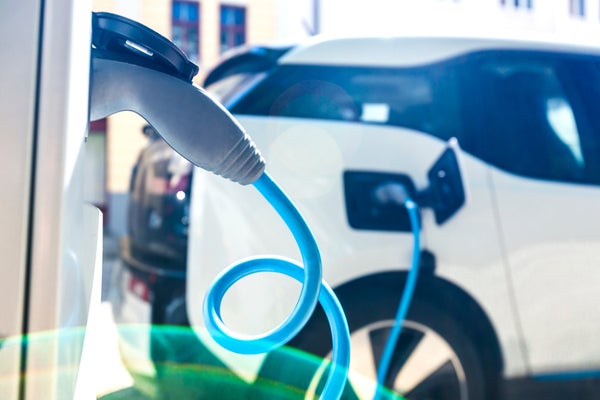
Advocates of electric cars want to tear down barriers that make the vehicles less accessible to some drivers — including those in communities hit hardest by air pollution.
Disadvantaged populations, including low-income communities, have unequal access to the technology, according to a new report from the Sierra Club and Plug in America, a nonprofit group that promotes electric vehicles.
For one thing, low-income drivers often live in multi-unit dwellings, whose building codes would need to be updated to accommodate EV charging spaces. And they’re often unable to take advantage of the federal tax credit that provides an incentive for EV adoption, the groups say.
On supporting science journalism
If you're enjoying this article, consider supporting our award-winning journalism by subscribing. By purchasing a subscription you are helping to ensure the future of impactful stories about the discoveries and ideas shaping our world today.
“Though EV deployment has increased in recent years, people from disadvantaged communities are more likely to encounter the strongest barriers to EV adoption,” the report says. “Additionally, most low-income folks will not be able to access the $7,500 credit given that they won’t have the tax liability. They can access it if they lease, but it’s not always guaranteed that the financing company will pass on the savings to the consumer.”
The report aims to spread awareness of the disparities, crossing into territory that few advocates of the technology have dared to enter.
Mary Lunetta, campaign representative for the Sierra Club’s Electric Vehicles Initiative, said she felt it was important to include the paragraph about the federal credit, despite hesitance among some advocates.
“In this industry, we never want to talk down about the credit,” Lunetta said. “But it’s important to recognize that it doesn’t serve all people all the time.”
Lunetta says it all comes down to environmental justice.
“Communities of color are disproportionately impacted by the air pollution of transportation. And it’s because they’re often located along really busy and smoggy freeways or major hubs,” she said. “As an industry, the clean transportation movement could do far more to understand who is pushed to the margins of the issue.”
The report also highlights state-level initiatives to broaden access to EVs, including San Diego Gas & Electric Co.’s Power Your Drive program, which is deploying around 3,000 charging stations at workplaces, at multi-unit dwellings and in disadvantaged communities.
Helen Gao, a spokeswoman for SDG&E, said she was pleased to see the initiative highlighted in the report.
“When the program was approved, SDG&E was committed to putting at least 10 percent of the chargers in disadvantaged communities,” Gao said. “Currently, we’re at 35 percent. So we’re far exceeding our goal.”
The effort is particularly important given that transportation is the largest source of greenhouse gas emissions in California, clocking in at 39 percent, she added.
Reprinted from Climatewire with permission from E&E News. E&E provides daily coverage of essential energy and environmental news at www.eenews.net.