
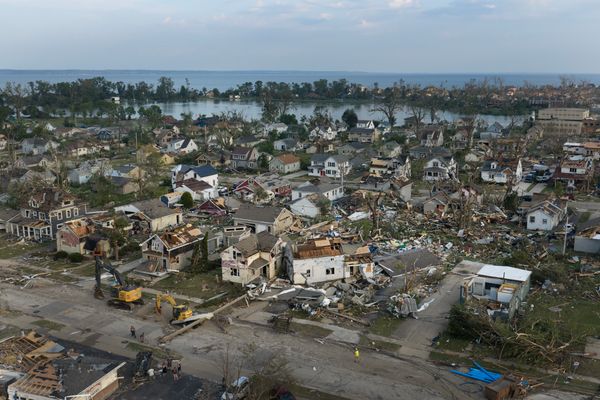
Nearly four in 10 Americans have lived through an extreme weather event in the past year, and of these, 38 percent say they feel like their lives are shaped by forces outside of their control, a new survey finds.
The results reflect the fact that the U.S. has been hit hard with extreme weather and climate-change-driven disasters: In 2025 there were 23 separate events that resulted in at least $1 billion in economic damages, including fires in Los Angeles, numerous tornadoes and hailstorms and a drought, according to Climate Central. Since 1980 there have been 438 such events, leading to a total cost of more than $3.2 trillion and resulting in more than 17,300 deaths.
The poll, conducted by the Walton Family Foundation and Gallup, suggests that Americans who were affected by an extreme weather event such as a flood, hurricane, tornado or hailstorm in the past 12 months have been more pessimistic and more anxious about their future than their peers who had not experienced damage from extreme weather.
On supporting science journalism
If you're enjoying this article, consider supporting our award-winning journalism by subscribing. By purchasing a subscription you are helping to ensure the future of impactful stories about the discoveries and ideas shaping our world today.
Americans in the South were hardest-hit, with almost 60 percent of people in Alabama, Kentucky, Mississippi and Tennessee saying they had been affected by extreme weather damage. Nationwide, the majority of people who were affected—some 57 percent of those polled—said they were at least somewhat worried that they will face another disaster within the next year.
The poll was conducted via an online questionnaire and completed by 6,732 Americans aged 18 and older and living across all 50 states and Washington, D.C., between February 26 and March 6.
Still, despite the growing cost of extreme weather, fewer Americans now believe climate change is real or caused by humans than they did in 2023, according to a biannual Yale University survey. In the results of the most recent edition of that poll, released in July, 68 percent of Americans said they believed global warming was happening, and 59 percent said it was mostly human-caused—three years earlier 74 percent and 61 percent respectively replied that way.