
In a highly controversial move, the Food and Drug Administration approved an especially powerful opioid painkiller despite criticism that the medicine could be a “danger” to public health. And in doing so, the agency addressed wider regulatory thinking for endorsing such a medicine amid nationwide angst about overdoses and deaths attributed to opioids.
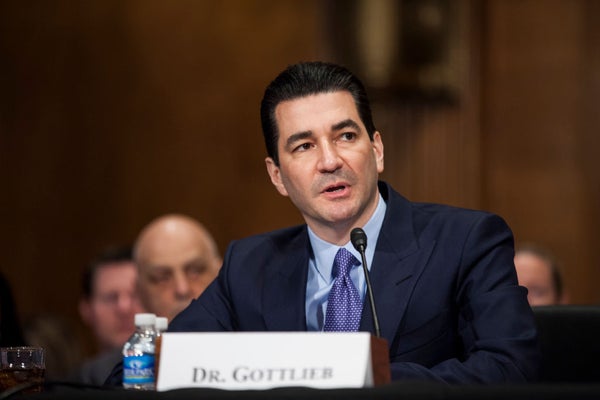
The drug is called Dsuvia, which is a tablet version of an opioid marketed for intravenous delivery, but is administered under the tongue using a specially developed, single-dose applicator. These “unique features” make the medicine well-suited for the military and therefore was a priority for the Pentagon, a point that factored heavily into the decision, according to FDA Commissioner Scott Gottlieb.
Although an FDA advisory committee last month recommended approval, the agency was urged by critics not to endorse the drug because it is 10 times more powerful than fentanyl, a highly addictive opioid. Among those who opposed approval were four U.S. senators and the FDA advisory panel chair, who could not attend the meeting, but took the rare step of later writing a letter to the agency.
On supporting science journalism
If you're enjoying this article, consider supporting our award-winning journalism by subscribing. By purchasing a subscription you are helping to ensure the future of impactful stories about the discoveries and ideas shaping our world today.
The objections included complaints that Dsuvia has no unique medical benefits and might be easily diverted by medical personnel, despite a risk mitigation plan the manufacturer, AcelRx Pharmaceuticals, must maintain. There was also criticism the FDA failed to convene the Drug Safety and Risk Management Advisory Committee, not just the Anesthetic and Analgesic Drug Products Advisory Committee. Last year, the FDA refused to approve the medicine over concerns about usage directions and a need for additional safety data.
“The lack of efficacy data and the (manufacturer’s) inadequate response to safety concerns have not been addressed since the FDA’s complete response letter was sent in 2017. Clearly the issue of the safety of the public is not important to the commissioner, despite his attempts to obfuscate and misdirect,” said Dr. Raeford Brown, the FDA panel chair and a professor of anesthesiology and pediatrics at the College of Medicine at the University of Kentucky. “I will continue to hold the agency accountable for their response to the worst public health problem since the 1918 influenza epidemic.”
In discussing the rationale for the approval, however, Gottlieb argued that the different formulation and battlefield needs made it possible for the FDA to have Dsuvia fit into the “overall drug armamentarium.” And while he acknowledged the criticism, he insisted the risk management program, known as a REMS, will ensure the drug is only used in a medically supervised settings.
“The FDA has made it a high priority to make sure our soldiers have access to treatments that meet the unique needs of the battlefield, including when intravenous administration is not possible for the treatment of acute pain related to battlefield wounds. The military application for this new medicine was carefully considered in this case,” he said in a statement.
In fact, the FDA and the Department of Defense on Friday formalized a collaboration for approving new drugs and devices. AcelRx, by the way, worked with the Defense Department to develop Dsuvia.
“There are very tight restrictions being placed on the distribution and use of this product. We’ve learned much from the harmful impact that other oral opioid products can have in the context of the opioid crisis. We’ve applied those hard lessons as part of the steps we’re taking to address safety concerns for Dsuvia,” he said.
Nonetheless, Gottlieb also acknowledged the episode triggered a broader discussion about FDA policy toward opioid approvals and whether additional opioid painkillers are necessary. In the 12-month period ending in March 2018, the Centers for Disease Control and Prevention reported a decline of 2.8 percent in the number of overdose deaths, to an estimated 71,073 people, which is still a large number.
Toward that end, he mentioned the FDA is undertaking a “comprehensive process” to develop a formal benefit and risk framework for how the agency evaluates the safety and efficacy of opioid medicines. Gottlieb also vowed that the FDA is re-evaluating how it considers individual and public health impacts of new opioids as they are reviewed for approval.
“I recognize that the debate goes beyond the characteristics of this particular product or the actions that we’re taking to mitigate this drug’s risks and preserve its differentiated benefits. We won’t sidestep what I believe is the real underlying source of discontent among the critics of this approval—the question of whether or not America needs another powerful opioid while in the throes of a massive crisis of addiction,” he said.
Among the questions Gottlieb said need to be answered: How does the availability of an additional opioid drug benefit the public health through its ability to, for example, provide therapeutic differentiation, promote more appropriate access, or advance safer use of these medicines? Does the approval of an additional opioid drug create added risks for diversion, accidental overdose, abuse and misuse, or other concerns?
“If the approval of an additional opioid will create such added risks, will the new drug provide sufficient clinical differentiation that can benefit certain groups of patients, or offer other important clinical benefit, such that the benefits to patients of introducing the additional opioid outweigh the risks? And can the implementation of REMS help mitigate some of these risks?”
Critics were not appeased.
“More than a year ago Commissioner Gottlieb endorsed a National Academy of Sciences report that called on FDA to overhaul its opioid policies. In particular, NAS urged FDA to utilize a new risk vs benefit analysis for opioid approval AND removal decisions,” said Dr. Andrew Kolodny, who heads the Opioid Policy Research Collaborative at Brandeis University and is executive director of Physicians for Responsible Opioid Prescribing, an education and advocacy group.
“If Gottlieb meant business when he endorsed the report—if he was speaking truthfully when he promised Congress that he would fix FDA’s past mistakesthen he would not have allowed this product on the market. Rather than approving new exceptionally dangerous opioid formulations, he would be pulling the most dangerous opioids off the market.”
“There is absolutely no need for this product,” Kolodny concluded. “Claiming we need it on the market to help soldiers on the battlefield is ridiculous. We already have sublingual fentanyl product available for use on the battlefield.”
Republished with permission from STAT. This article originally appeared on November 2, 2018