
Physicists think they have achieved one of the most coveted goals of their discipline: creating a superconducting material that works at near-room temperature.
The evidence is still preliminary and comes with a major caveat. So far, the material has been made only under pressures of about 200 gigapascals—or two million atmospheres.
But if confirmed, the feat would be the first example of superconductivity above 0 degrees Celsius, and some physicists say that the work could be a milestone in the study of superconductivity, which researchers hope will one day make the generation, transmission and use of electricity vastly more efficient.
On supporting science journalism
If you're enjoying this article, consider supporting our award-winning journalism by subscribing. By purchasing a subscription you are helping to ensure the future of impactful stories about the discoveries and ideas shaping our world today.
“Long-held dream”
“The observation is amazing,” says Yanming Ma, a physicist at Jilin University in Changchun, China, although he cautions that the work is in its early stages. Getting to room temperature has been “a long-held dream,” Ma says, ever since superconductivity was discovered more than a century ago.
Russell Hemley, a geophysicist at George Washington University in Washington D.C., first announced evidence of this feat at a conference in August. His team is now publishing the results in Physical Review Letters.
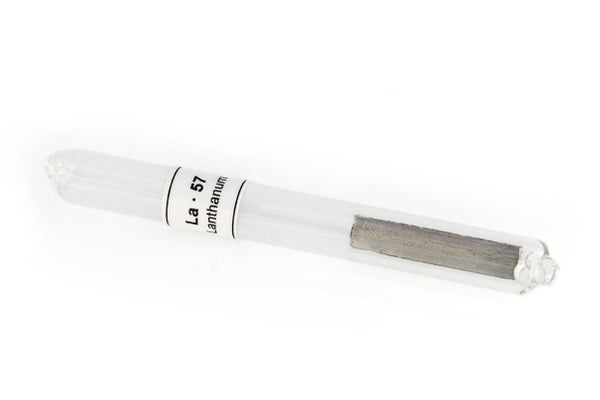
The authors report seeing a sudden drop in electrical resistance at 7 degrees C in a material they synthesized: a “superhydride” — a compound that contains a large amount of hydrogen—of lanthanum, LaH10. Such a drop is the hallmark of a phase transition to superconductivity that occurs when the material is cooled below a threshold temperature. “We’re very confident that we see a transition,” says Hemley.
The achievement of superconductivity above 0 degrees C has no particular physical meaning, but it is “enormously important psychologically,” says Mikhail Eremets, a physicist at the Max Planck Institute for Chemistry in Mainz, Germany. In 2014, Eremets’ team showed that another hydrogen compound—hydrogen sulfide—becomes a superconductor at what was, at the time, the record high temperature of -83°C for superconductivity.
Record highs
In their experiment, Hemley and his collaborators placed a diamond anvil in a synchrotron beamline at the Argonne National Laboratory, outside Chicago in Illinois. They used the anvil’s diamond tips to squeeze a minuscule sample of lanthanum and hydrogen to pressures of up to 200 gigapascals. Next, they temporarily heated the compound and watched its structure change along with its conductive properties, monitoring the process with X-ray diffraction.
The researchers produced a new structure—the LaH10—which previous simulations by their team and others, including Ma’s, suggested would be superconducting at very high temperatures.
They allowed it to cool—while keeping it at high pressure—and measured its electronic properties. In certain conditions, they saw the electrical resistance drop at a temperature of 280 kelvin, or about 7 degrees C.
The evidence presented in Hemley’s paper has yet to convince Eremets. Follow-up experiments in his own lab suggest that the material’s transition temperature is not quite as high as 7 degrees C, although it still comes in at an impressive -23 degrees C.
Hemley says that in as-yet unpublished follow-up work, his team detected another important sign of superconductivity: the material expelled existing magnetic fields from itself. The phenomenon is considered to be gold-standard evidence of superconductivity and, if confirmed, could clinch the team’s claim.
Just the beginning
Compounds such as the lanthanum superhydride made by Hemley’s team, and the hydrogen sulfide studied by Eremets in 2015, are conventional superconductors, meaning that their physical properties have been well understood since the 1950s. Conventional superconductors with room-temperature transitions have been predicted for several decades, but only recently have these predictions begun to be tested in the lab.
More-exotic superconductors discovered since the 1980s have, until recently, boasted record-high transition temperatures, but are yet to achieve room-temperature superconductivity and their theoretical underpinnings are unexplained.
Hemley says he is confident that other materials exist—beyond even those explored in simulations—with even higher transition temperatures.
And he adds that his team’s experiments could offer hints on how to develop materials that might have similar electronic properties at less extreme pressures. “This is just the beginning of a new era of superconductivity,” says Hemley.
This article is reproduced with permission and was first published on December 19, 2018.