
A person in the Washington State has died of avian influenza. It’s the first human death from bird flu in the U.S. since January—but the infection was of a different strain than the one that has been devastating poultry farms and wild animals for the past several years.
The Washington State Department of Health announced the death on Friday, noting that the person who died had been hospitalized since early November. The agency identified them as an older person with underlying health conditions who had backyard domestic birds. It also confirmed that the virus was of the subtype H5N5—not the H5N1 strain that has caused 70 human infections and one death in the U.S. since 2024, as well as countless deaths of wild and domestic animals since it arrived in North America in late 2021.
Many influenza viruses are identified by two classes of proteins that appear on their outer shells, hemagglutinin and neuraminidase. Each of these proteins comes in multiple forms, and different combinations of these two protein types are referred to as “subtypes” of virus. The long-circulating H5N1 virus and the H5N5 virus responsible for the recent human death have the same hemagglutinin protein (H5) on their outer shells but different neuraminidase proteins.
On supporting science journalism
If you're enjoying this article, consider supporting our award-winning journalism by subscribing. By purchasing a subscription you are helping to ensure the future of impactful stories about the discoveries and ideas shaping our world today.
The fatality is not a reason to panic and does not suggest the risks of bird flu are larger than scientists have believed, says Richard Webby, a virologist at St. Jude Children’s Research Hospital. “We don’t have any reason to suspect H5N5 has more or less of a pandemic risk than H5N1, and similarly, we don’t have any reason to suspect, as a whole, it causes more severe disease,” he says. “Most people’s exposure to the H5 viruses is still going to be to the H5N1 just because there’s so much more of that in the bird population.”
One concern of seeing a human infection caused by a new subtype of virus is that the H5N1 bird flu virus may have exchanged genes with other influenza viruses circulating in animals. That sort of mixing—which influenza viruses are particularly prone to—can breed new viral strains that have the potential to cause more serious infections or spread more easily between humans.
Scientists have a longstanding monitoring program for influenza viruses in wild birds that has gathered decades of data about where bird flu viruses are moving and how they are changing. This surveillance program means that Webby and his colleagues knew that H5N5 viruses had been circulating in shorebirds and gulls in eastern Canada. Webby says scientists confirmed that the virus sequenced from the fatal human case is related more closely to those from eastern Canada than to H5N1 viruses; this supports the idea that this is an existing virus that made the trek west in birds, rather than a new virus that showed up abruptly in humans.
The Washington State Department of Health statement notes that health officials are monitoring people who had close contact with the deceased person but that no one else has tested positive for bird flu and there are no signs of transmission between people.
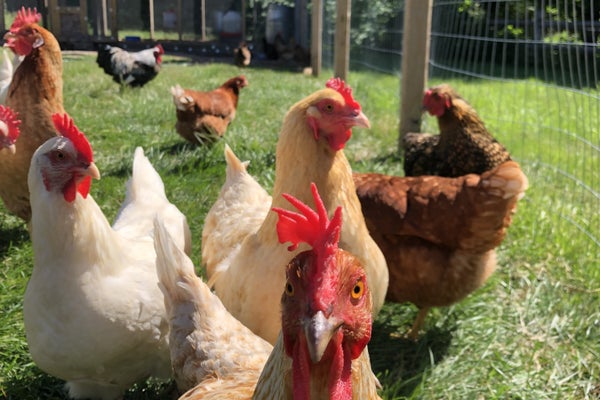
Keeping backyard poultry is a known risk factor for acquiring bird flu. The prior U.S. bird flu death, which occurred in Louisiana in January, was also in a person who tended a flock of chickens. That person was also more than 65 years old and had underlying health conditions.
Public health experts say that people who keep backyard poultry should work to keep their birds separated from wild birds to reduce the odds of domestic birds catching the virus. In addition, people should wear dedicated clothing and shoes that stay outside when they are caring for backyard birds and protective gear such as a mask and goggles when cleaning a coop. They should thoroughly wash their hands with soap and water after touching chickens, eggs or the coop.
People in general should stay away from dead wild animals and from animals that are acting strangely because they could be infected with avian influenza or another dangerous disease.
Experts also recommend that everyone more than six months old gets a seasonal flu shot if they have not yet done so this fall. The vaccine won’t protect against bird flu, but it will reduce the odds of someone being infected with both seasonal and avian influenza viruses at the same time, a situation that could lead to dangerous viral mixing.